Research that works for developing countries and AustraliaLaos
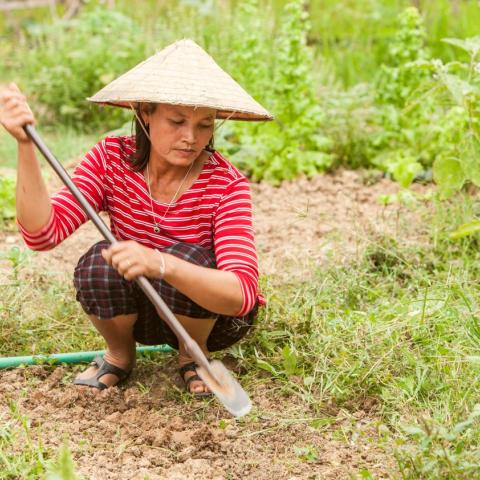
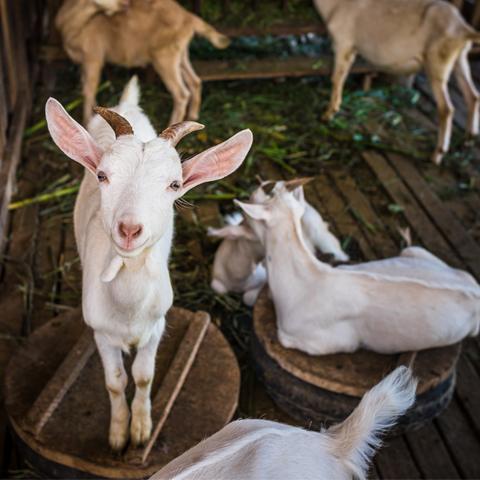
Overview Distinguishing features of this landlocked country are low population density, high ethnic diversity, poor infrastructure and geographical dispersion of people. Agriculture employs over 80% of the population and forms 53% of GDP, but at least one-third of the population remain below the poverty line. There has been a reasonably good economic recovery since 1999, with major exports of garments, timber and wood products, gold re-exports, hydroelectric power and coffee. Despite overall national self-sufficiency, seasonal rice (and food) shortages occur regularly in many provinces and districts. Food security is still central to agricultural development in Laos. Rainfed rice farming in Laos is impacted by the effects of seasonal climate variability and, in the long term, of climate change. Flows along the Mekong River and its tributaries will also be affected by climate change and by impacts of planned dam construction. It is anticipated that Laos will be one of four partner countries involved in a new ACIAR climate change adaptation initiative designed for implementation during 2008-09. As the Thai economy develops, Laos is starting to exploit opportunities in specialist agricultural products required by Thailand, and to use the comparative advantage of low labour costs in Laos. Laos has tended to develop two agricultural economies in recent years-the lowland areas along the Mekong River, where access to markets in Thailand has stimulated agricultural development; and the uplands, where many farmers still practice 'slash-and-burn' shifting cultivation. The Lao PDR Government is expanding irrigation in lowland areas and working to find alternatives to slash-and-burn cultivation in the uplands. With increasing population pressures in the uplands, fallow periods have become unsustainably short. In both upland and lowland areas, diversification of production and greater integration of both agricultural systems with markets remain priorities. However, in the areas of comparative advantage, market opportunities and research needs, the two economies generally differ. Lowland agriculture is remarkably rice-centric-nationally about 2.3 million tonnes (t) are produced, compared with 120,000 t of maize, 150,000 t of sweet potato and much smaller amounts of legume crops. Fish accounts for 40% of dietary protein intake. Upland systems are often more diverse than lowland ones but are poorly connected to markets, with rice being produced mainly for household consumption. Some simple approaches can be successful in reducing slash-and-burn agriculture in these regions. Examples include the introduction of better cut-and-carry forage production systems and the use of income-generating livestock, forestry and agroforestry. Forestry provided up to one-third of export revenue in the 1990s, but the government has since moved to limit harvesting of natural forests, leading to falls in income from log extraction. Laos remains a heavily forested country by Asian standards and long-term conservation of this natural resource is critical. More so than other Asian countries, the harvesting of non-timber forest products for food, fibre and medicine forms an important income and livelihood source for many rural households in Laos. Smallholder livestock are important in the Lao economy, on average providing half the annual household income of smallholders. ACIAR research will assist in the control of infectious disease across and within countries (transboundary diseases) in partnership with regional disease control initiatives such as the OIE South-East Asian Foot-and-Mouth Disease Control Program. Important priorities will be improvement to risk assessment of disease transmission that occurs with trading and movement of livestock, improvement to disease surveillance systems, and application of any advances to disease control programs. Projects may include cooperation with neighbouring countries that are involved in trade. There are opportunities to improve village-based and small-scale commercial enterprises by limiting important constraints, one of which is disease. A major emphasis of past ACIAR work has been the establishment in Vientiane of an animal diseases laboratory to service Laos. Other successes include the introduction and selection of cold- and drought-tolerant rice varieties, identification of the major rodent pests affecting rice farming, capacity building in forestry research and agricultural extension approaches, management of indigenous fisheries and provision of training, including scientific data analysis and scientific writing in English. In 2006, in collaboration with the National Agricultural and Forestry Research Institute, ACIAR implemented a small grants scheme to enable Lao researchers to develop skills in the design and management of agricultural research projects. |
World populationRSS FeedsOur ProgramsBy Country: |