Research that works for developing countries and AustraliaPapua New Guinea
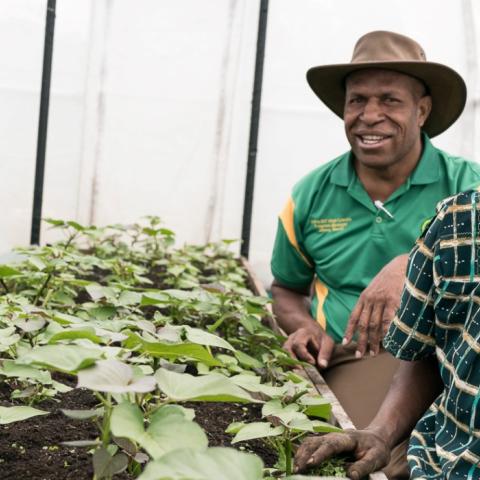
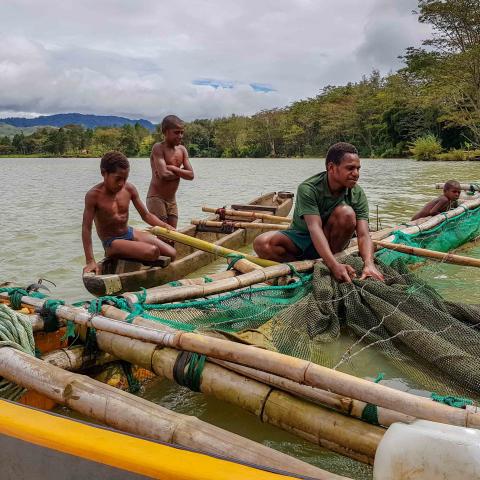
Overview PNG is one of Australia's most important development partners, and ACIAR's program in PNG reflects this. ACIAR's program recognises the many challenges to agricultural development in PNG, including poorly developed infrastructure, weak market signals and services, pressure on land and renewable resources as a result of population increases and new pest and disease threats, and poor product quality. Future impacts of population pressure and of HIV/AIDS and other human diseases on the farming sector, including effects on labour availability and productivity, will be addressed and gender issues will be mainstreamed into the program. Recognising the enormous potential of agriculture for sustaining the basic livelihood of the people, the Papua New Guinea Department of Agriculture and Livestock has developed a National Agriculture Development Plan as a blueprint to guide future directions in agriculture and rural development. Village-based agriculture supports over 70% of the population, and domestic trading of fresh produce is a very important source of cash income. By far the most important crop in PNG is sweet potato, the dominant staple for over 65% of the rural population. The main export tree commodities are timber, oil palm, coffee, cocoa and coconuts. Forestry is PNG's third largest revenue earner and a major contributor to economic and social development. PNG has several significant competitive advantages in relation to the production of timber-available land, good soils and climate, and a long history of successful incorporation of trees into agroforestry systems. The PNG fisheries zone of 2.4 million square kilometres is the largest in the South Pacific. The fisheries zone includes an extended reef system, numerous islands and an extensive coastline. These create huge opportunity but also present an enormous challenge for monitoring and control. The total market value of the PNG catch is estimated at $A140-160 million. Pigs and poultry are important village animals and there are some live exports of cattle from PNG. ACIAR will assist in the development of capacity to detect and manage infectious disease in the wider context of biosecurity arrangements and in collaboration with other Australian agencies. Where relevant, close linkages will be formed between ACIARfunded programs in PNG and the Pacific Islands, for example in root and tree crops, fisheries and forestry. Key principles in designing and executing the program include the importance of engagement with the private sector, industry bodies and NGOs along with government in both research and implementation of research results; the importance of research that assists the engagement of smallholders in the cash economy; and the importance of understanding social and economic issues affecting farmer decision making and factors influencing adoption of new technologies. Research is urgently needed into more effective ways of up-scaling the adoption of R&D results from pilot level involvement of communities to enable broader implementation. ACIAR will work with counterparts to assist in communication and extension of the results of research. As well as making a greater commitment to the implementation of the results of research, the need for on-going development of agricultural technologies remains strong. There is particular need to develop the informal sector (including those involved in village level production and marketing of root and horticultural crops, small livestock), improve the productivity of major tree crops (increase production and exports, lower production costs), and to support research and development that assists in diversification of the agricultural export product base. There are requirements for capacity building at the individual and institutional level in all areas, but particularly to support analyses of social and economic constraints and opportunities, marketing and value addition of agricultural products and in agricultural education. PNG's relative lack of resources and expertise is a constraint in R&D activities and delivery of extension services. It is therefore crucial during design and implementation of projects to involve farmers and extension workers, and to include training and packaging of research results in a form useful to farmers, members of industry and policymakers. Relationship to the AusAID PNG strategyAusAID's PNG program supports the Government of Papua New Guinea's medium-term development strategy focus on sustainable broad-based economic growth for the country. It does this by working with PNG government agencies and systems to ensure better use of the country's own resources, leading to stronger economic management, better delivery of essential services, and improved law and order. The importance of strengthening political governance, building sustainable government institutions, exploiting opportunities to stimulate sustainable economic growth and maintaining service delivery is recognised. In 2008-09 the program focus will be on improved governance and nation building, sustainable broad-based economic growth and increased productivity (including from the agriculture, forestry and fisheries sectors), improved service delivery and stability, and responding to the HIV/AIDS crisis. ACIAR's PNG program, delivered with AusAID cofunding, supports the emphasis on economic growth by working with PNG government agencies to improve agricultural productivity. Partnership with PNG public and private institutions supports better use of PNG's own resources. With more than 85% of the population in rural areas, development of agricultural industries and the smallholder cash economy will be critical to achieving broad-based economic growth and improving rural livelihoods in PNG. |
World populationRSS FeedsOur ProgramsBy Country: |