Date released
27 May 2025

For those living in rural communities in the highlands of Papua New Guinea (PNG) – among hills and valleys studded with coffee and pineapple plants – it can be hard to gain access to formal banking systems. This means saving money can be tricky. For women, the challenges are often compounded. 

An ACIAR-supported project, delivered by Curtin University, CARE International and the PNG Coffee Industry Corporation (CIC) between 2016 and 2021, investigated the difficulties facing women in PNG who want to run business enterprises.  

As part of the study, a cluster of villages within the Bena area, not far from the regional hub of Goroka, became the pilot site of a model that helps rural people gain more control over their savings. The Village Savings and Loans Association (VSLA) model is designed to bring communities together to bridge literacy and numeracy challenges, and develop a system of saving and loaning money that works for them. Women were at the forefront of the VSLA pilot project. 

Though the pilot project ended in 2021, the impacts are long-lasting. VSLA groups are still operating in the villages today and have enabled local people to save money, start new businesses and gain financial confidence. 

Empowering women has benefits for all

Lead researcher Dr Gina Koczberski said agricultural businesses in PNG were traditionally seen as a male domain.  

‘But Papua New Guinea is constantly changing, and women are very keen to move beyond their typical roles, such as earning income by selling fresh food at local markets,’ said Dr Koczberski. 

For village woman Mrs Golalo O’oso, being part of the project meant she was able to get a loan with her husband and start a coffee cherry-buying business.  

‘The VSLA motivated us to register a business and go into cherry buying. Our end goal was to be financially stable to meet our son’s educational needs,’ said Mrs O’oso. 

Their successful business venture means they’re able to plan a better future for their family.  

Our life has changed. Because of this, we have encouraged our son to take business studies and to carry on from where we start. We are village people; our son is our future.

Fellow local woman, Ms Penny Gitene, has also been able to better provide for her family as a result of participating in the VSLA.  

‘I wanted to save my money and see some change in my life, and I have saved for 6 years and have seen some change,’ said Ms Gitene. 

‘I have bought roofing iron for myself and am able to help my children with their school fees and school needs.’ 
Image
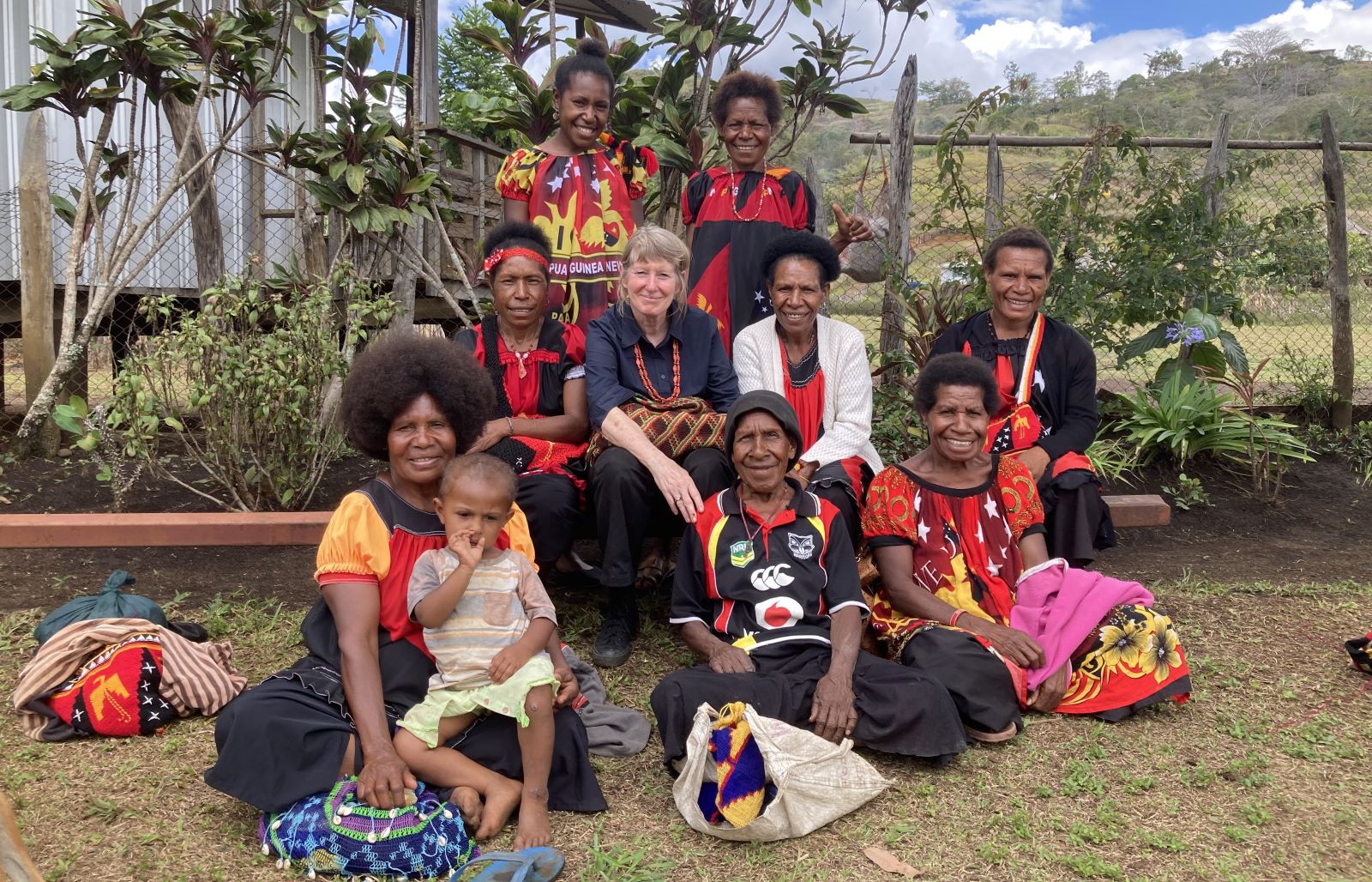
Group of women sitting outside smiling at the camera
Project leader Dr Gina Koczberski with women participating in Village Savings and Loans Association groups in Papua New Guinea. Photo: Curtin University

Village savings and loans  

The VSLA model was first devised by CARE International in 1991. Since then, it has been introduced to rural communities across Africa and South and Southeast Asia. In the model, groups of 20 to 30 people come together to collaborate over a 9 to 12-month cycle. 

In Bena, the project formed 2 groups – a women’s group and a mixed-gender group. Today, there are 4 groups in the community.  

At the start of each saving cycle, each group decides what the minimum saving amount, or ‘unit’, will be and members deposit cash at fortnightly meetings. They can add up to five units at each meeting and savings are recorded in a stamped passbook.  

Dr Tim Sharp, a co-researcher of the study, said once members had deposited their savings, they could take loans from the pooled funds.  

‘They can take out a loan up to 3 times the amount that they have in their savings,’ he said. 

Loans must be repaid within 12 weeks and accrue interest at a rate determined by the group. At the end of each cycle the original savings deposited plus interest earned are returned to the group members, who hold a ‘share-out’ meeting to divide funds. Like many things in PNG, this has become a ‘ritualised’ event and people from the villages are invited to attend the celebration.  

Dr Sharp said it was a heartening moment to witness. 

‘The first share-out was quite a community occasion, with singing and everyone dressed up in colours – the women in the colours of the Papua New Guinean flag and the men in the colours of the Eastern Highland’s Province flag. There was a lot of pride,’ said Dr Sharp. 

The money saved in the VSLA group has enabled women to invest in new or existing business enterprises – such as coffee buying, beekeeping, livestock, and buying fertiliser and insecticides for vegetable growing – as well as purchasing supplies for their families, such as school uniforms for their children.  

Transformation  

As Women in Coffee Officer at Coffee Industry Corporation (CIC), Mrs Linda Simerox provides advice to women coffee farmers. She said the key challenges facing women who want to go into business in PNG are access to capital and lack of support from their husbands or male relatives. However, the VSLA pilot at Bena helped women build literacy and numeracy skills, which has in turn increased their business capabilities.  

Image
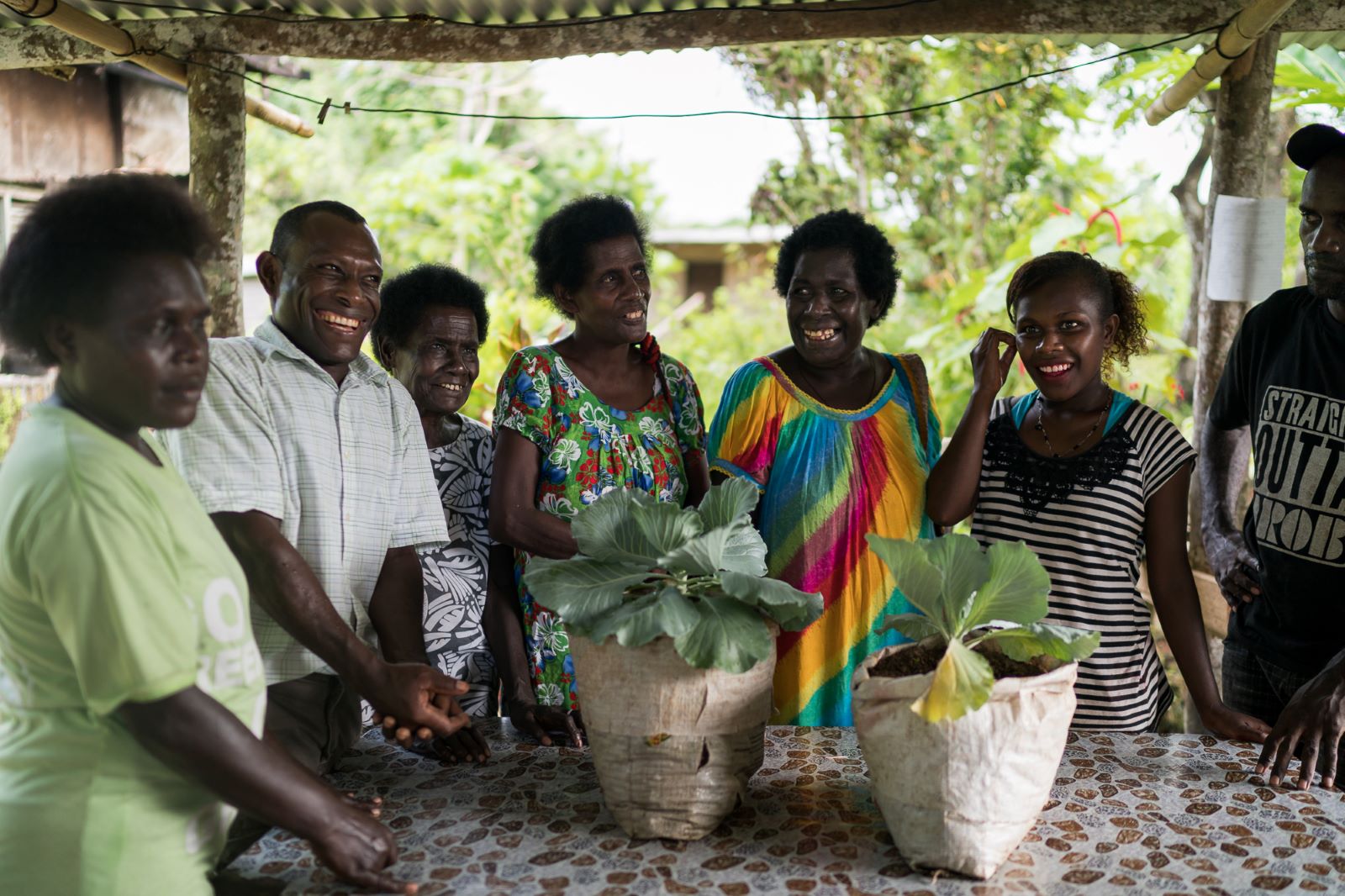
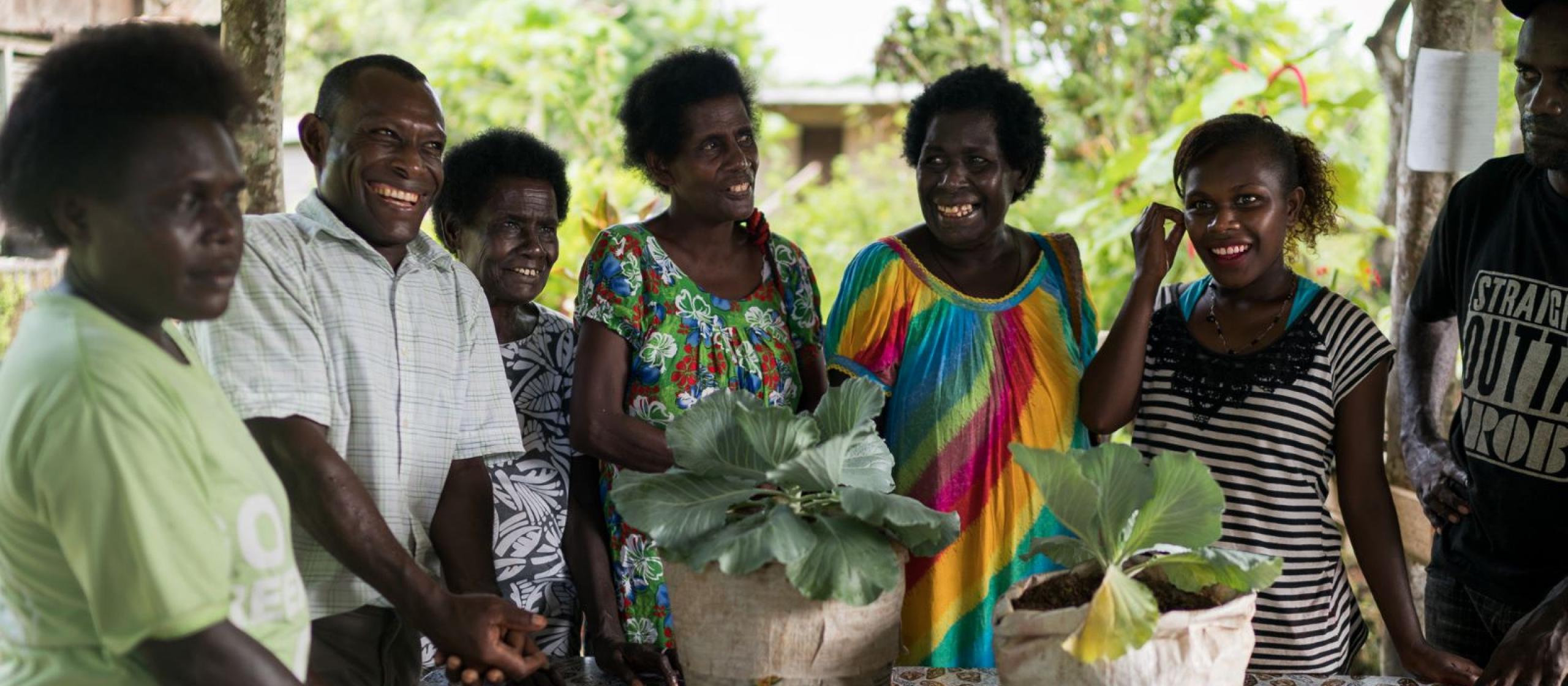
A group of people staning around a table containing two plants
Village loans are helping people in rural communities in Papua New Guinea to start new businesses and improve their livelihoods. Photo: Conor Ashleigh

They’re able to speak for themselves now,’ said Mrs Simerox. ‘They know the process of doing things … they’ve developed confidence.’  

Dr Sharp said some women faced pushback from their male relatives about taking part in the VSLA project.  

‘Initially, some of the women spoke about their husbands being quite sceptical about what they were doing … and not allowing their wives to attend.  

‘The first share-out was quite a turning point for those relationships – by being able to have this public event, the women were showing what they were able to achieve,’ noted Dr Sharp.  

Dr Koczberski said while many husbands were supportive, one story stands out to her.  

A woman was able to save a significant amount of money throughout the initial cycle – she received the equivalent of about AU$500 in the share-out. 

‘She knew her husband wasn’t supportive, but she came back to the house and just put the $500 on the table and said, “Well, that’s what I’ve done”,’ said Dr Koczberski.  

‘After that, he became very supportive, and now they run a small pineapple business together.’  

Expanding the loans program 

In Bena, the 4 VSLA groups are now working together to benefit the whole community.  

As a result of having more capital, the groups have opened formal bank accounts, and some members have their own superannuation accounts.  

The VSLA model is spreading throughout PNG. CIC, CARE International and local non-government organisation, Mercy Works, have successfully established the VSLA model in other villages in the Eastern Highlands and in other provinces.   

Dr Koczberski said the project’s major success has been the lasting impact on the women involved.   

'I think one of the biggest benefits was women reporting that their achievements made them feel they were a lot more capable of taking on challenging tasks than they initially thought when they joined in the trial,' she said.

‘These women are changed now. This greater sense of self-confidence is something that will continue to shape their lives in the future.’ 
 

ACIAR Project: 'Identifying opportunities and constraints for rural women’s engagement in small-scale agricultural enterprises in Papua New Guinea’ (ASEM/2014/054