Agribusiness

Regreening for the future: Integrating climate change adaptation pathways into community-led regreening in eastern Africa

Group of people standing under a tree in a field
Image
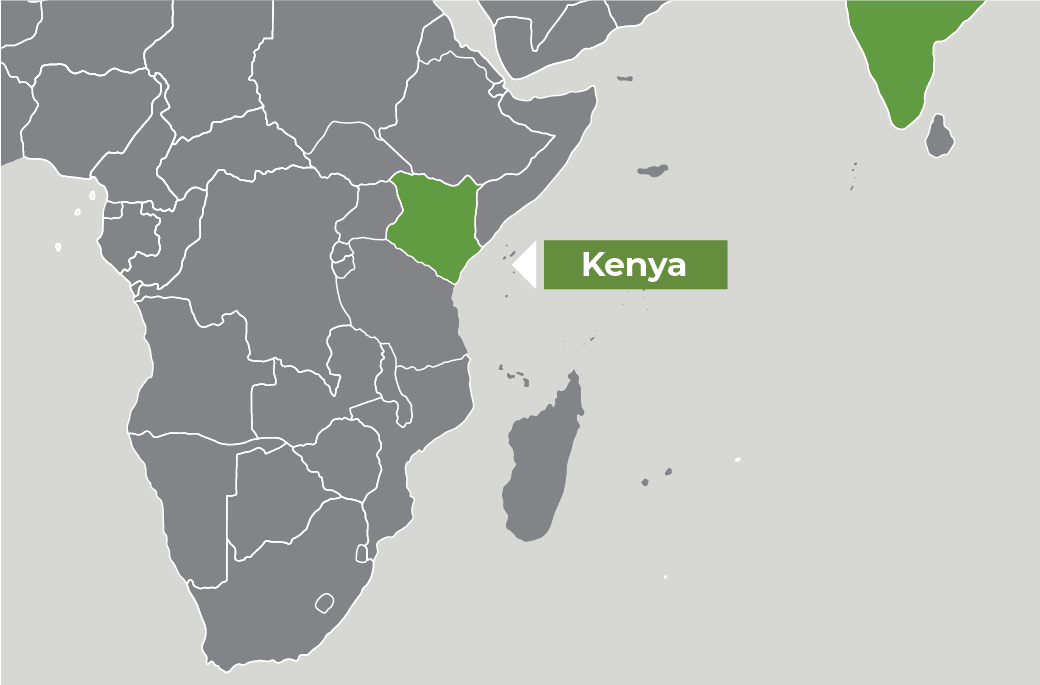
illustration of a map showing Kenya

Research need

This project aims to learn how integrating adaptation pathways within a community-led regreening model could enhance the capacity of communities in Kenya and the eastern Africa region to continuously adapt to climate change long into the future. 

Climate change is compounding the impacts of land degradation on human development in Kenya and the eastern Africa region. To address this situation, communities need regreening projects that anticipate future climate scenarios, adapt over time and are supported by an enabling policy and development environment. 

To deliver such climate-ready regreening projects, there are clear research gaps to improve the way we design and facilitate such projects under climate change, how we engage with stakeholders using evidence-based approaches, and the way we monitor, evaluate and learn from these projects. This research project aims to address these gaps and to do so in tangible and grounded ways, embedding action research directly in existing development projects and plans. 

On this page

Project activities

  • Undertake community scoping activities to establish baseline data. Biophysical data will be focused on adaptation options for regreening and their potential to address current climate-related risks and those based on different climate scenarios. Climate-resilient green value chain enterprises will also be assessed and linked to livelihoods and employment creation to enhance the adaptive capacity of vulnerable communities, people living adjacent to forests and those dependent on farm produce for income generation.
  • Map and analyse stakeholder and enabling environments to understand what is needed for a climate-ready regreening-communities approach, and also to identify the range of stakeholders that need to be engaged or reached throughout the project to support scaling from local to global levels.  
  • Conduct workshops with communities to understand the challenge, adaptation needs and desirable goal, vision or end point, and to analyse possible futures and the decisions and actions needed under different climate scenarios. These may include synthesis of existing information on possible agroforestry options under future climate or land health scenarios along with downscaled climate models and local knowledge.
  • Track changes resulting from different treatments/pilots to identify the most promising approaches for different elements of the climate-ready regreening process.
  • Based on a planned communications component, produce a variety of products including conference presentations, blogs, impact briefs and other accessible products that will highlight the outcomes and results of the research. 

Expected outcomes

  • Rural communities (including households, regreening committees, community facilitators) have improved understanding of current and future climate considerations and improved capacity to lead and participate in a climate-ready regreening process, including sharing insights beyond their community.
  • Influential stakeholders within the enabling environment for regreening (specifically county governments, national government research and World Vision as the primary scaling pathways) are aware, engaged and able to support adaptation and scaling in the future.
  • National government actors in Kenya as well as development and research partners in eastern Africa understand and value adaptation pathways and are able to encourage the use of the approach, especially for regreening.