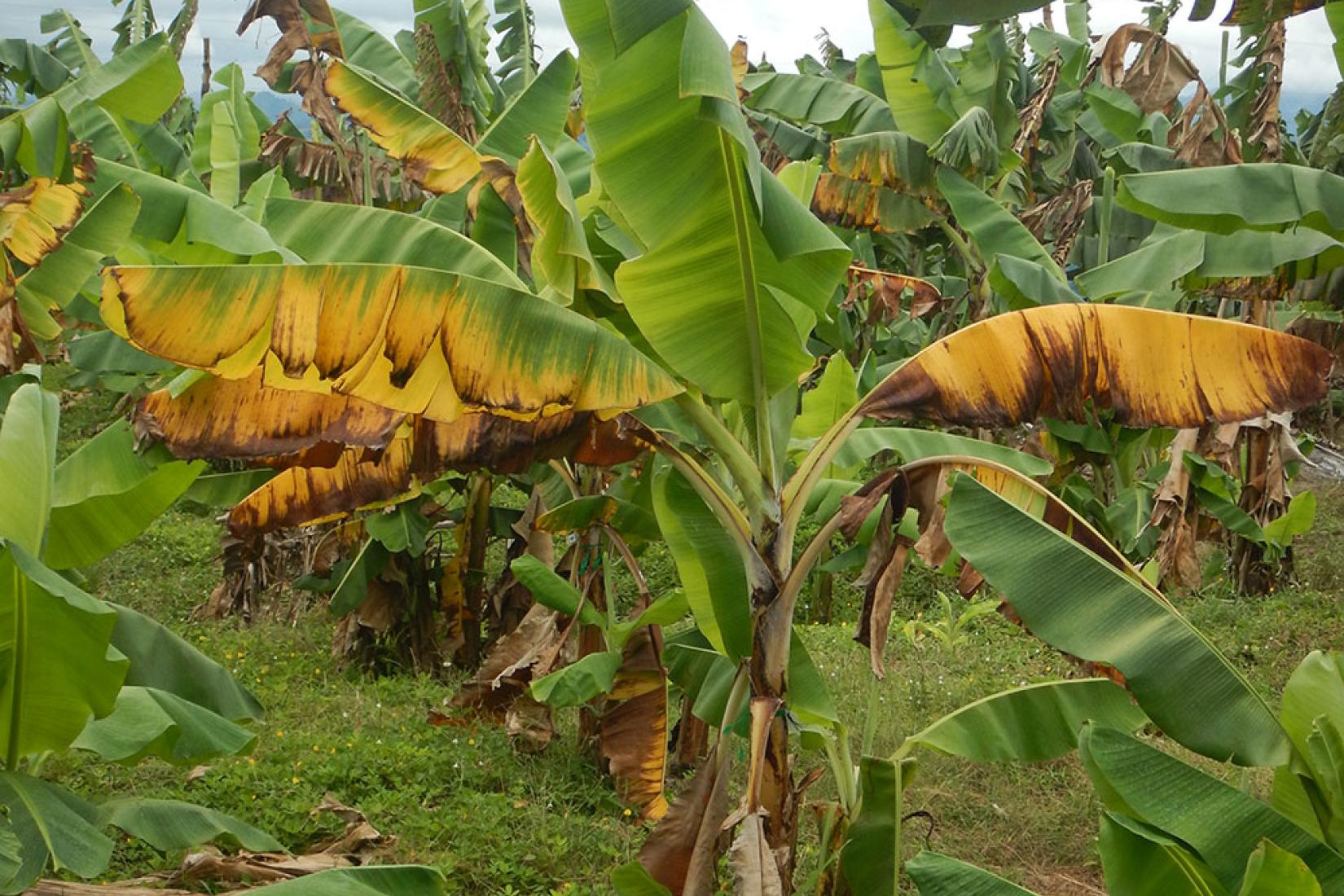




When Panama disease devastated Gros Michel banana production worldwide in the 20th century, growers moved to the Cavendish variety, which resisted the fungus responsible: Fusarium oxysporum f.sp. cubense (Foc).
Since the 1960s, plantations of Cavendish bananas have expanded to now produce about 20 million tonnes of fruit a year. But as Cavendish became established as the dominant banana variety, a new threat emerged in the form of Fusarium Tropical Race 4 (TR4). Cavendish is particularly susceptible to this strain of Fusarium and, in some locations, the fungus has decimated production within a season.
TR4 was identified in the Indo-Malay region in the 1990s, but little was known about this strain of Fusarium. Later, TR4 was also found in Darwin, Australia, in 1997. As Indonesia and Australia were relatively small producers in banana export markets, TR4 research was not seen as a priority. Once TR4 was found on the island of Mindanao in the Philippines, the main banana export region, research became a priority to protect the many livelihoods that are dependent on banana production. Once South America reported TR4 in 2019, and the supply of bananas to Europe was jeopardised, the need for research further increased.