Celebrating 35 years of research-for-development collaboration in Laos
For 35 years, ACIAR and Laos have partnered to strengthen food security, fisheries, forestry and farming – building local expertise, boosting rural livelihoods and shaping sustainable development for the country’s future.
ACIAR and Laos celebrate 35 years of collaboration in 2025, with the Government of Lao PDR paying tribute to the many scientists who have contributed to the country’s development through ACIAR-supported projects.
Cassava, rice, water management, fisheries and forestry have been major areas of collaboration in this time, helping Laos improve productivity. By sharing scientific expertise and building local capacity, Laos has avoided some of the negative impacts of development experienced elsewhere, particularly in groundwater and fisheries.
The collaboration between countries has also provided the foundation for further research, attracting investment from organisations such as the World Bank and Asian Development Bank.
Here, we showcase some of the highlights from this successful collaboration.
Image
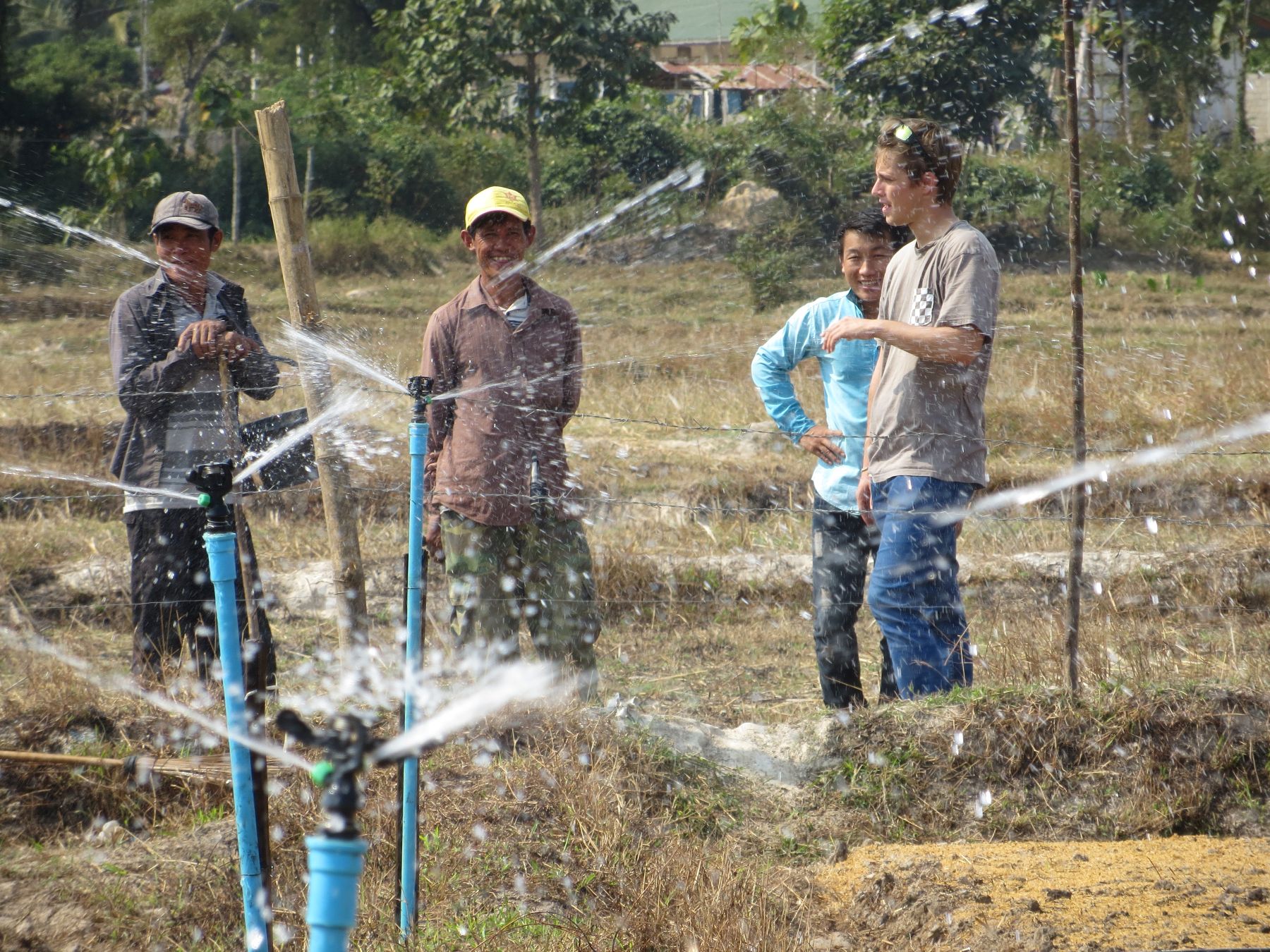
Hydrology work in Laos has helped develop groundwater for agriculture, improving the climate resilience of the country’s food production systems. Photo: International Water Management Institute
Developing groundwater resources
Hydrology research in Laos has helped develop groundwater for agriculture, improving the climate resilience of the country’s food production systems.
Dr Paul Pavelic, working with the International Water Management Institute, first became involved in a project for Laos in 2012, identifying groundwater available for agriculture.
‘Laos doesn’t have the groundwater depletion problems that other countries have experienced,’ said Dr Pavelic. ‘So there was plenty of opportunity for sustainable development.’
The project piloted small-scale irrigation using groundwater, providing scientific foundations and a policy framework for sustainable development.
A follow-up project tested solar-powered pumps for drawing groundwater to irrigate crops and expanded the research area to better understand groundwater availability across southern Laos.
Dr Pavelic said capacity building in government and academia was a key component of both research projects, as Laos had limited expertise in groundwater development and management.
As access to groundwater in Laos continues to expand, it is improving climate resilience by providing dry-season irrigation and intensifying agriculture, particularly fruit and vegetable cropping. This has made nutritious food more widely available and improved rural livelihoods.
Image
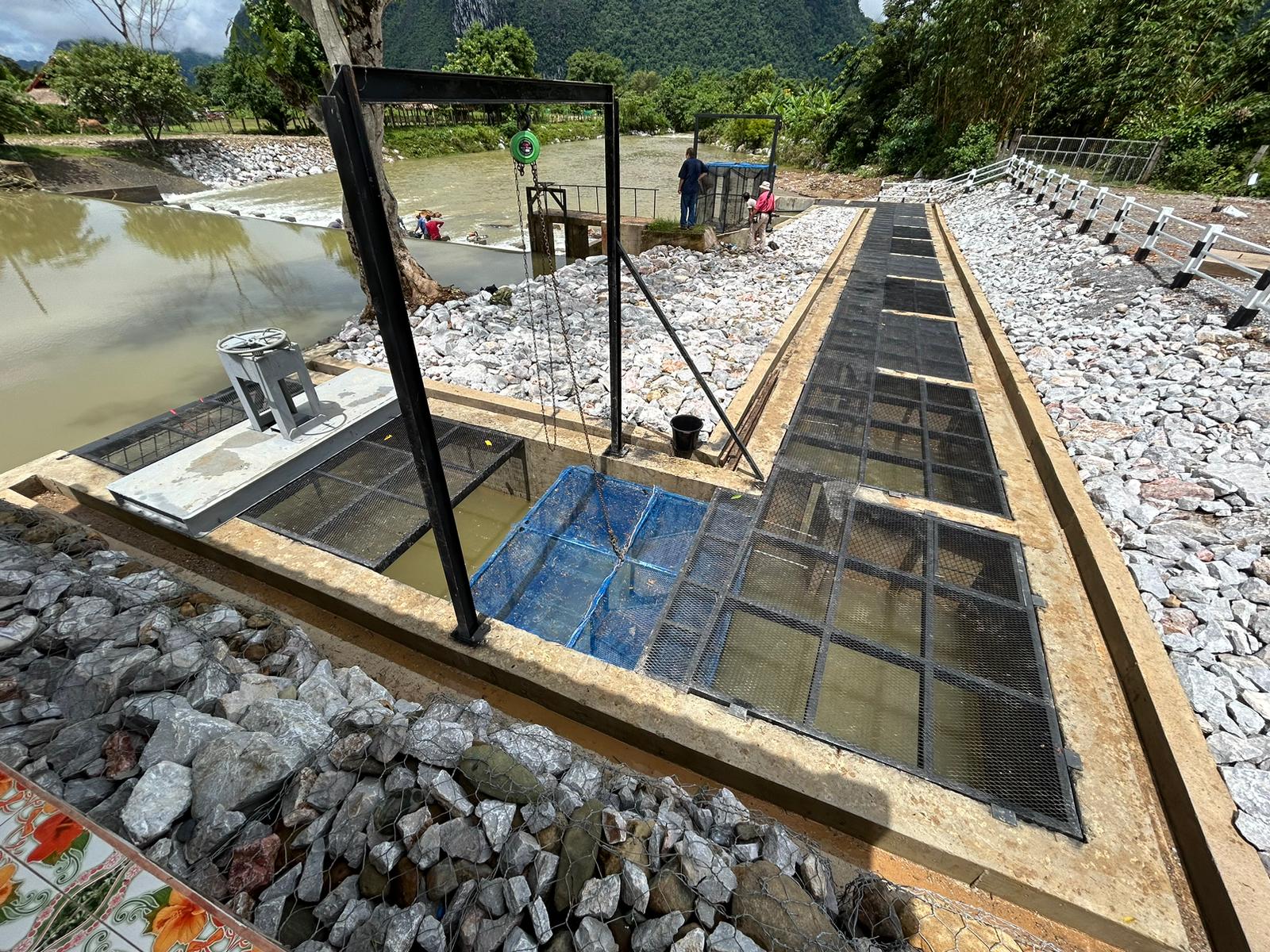
Designing fishways and fish ladders has helped protect Laos’s vital fisheries resources. Photo: Garry Thorncraft
Fish ladders protecting inland fisheries
The work of fisheries scientist Professor Lee Baumgartner at Charles Sturt University, and his team, has helped protect Laos’s inland fisheries and food security for millions of people.
When Laos began developing river infrastructure in the early 2000s, Professor Baumgartner, drawing on lessons from Australia’s Murray–Darling Basin, advocated incorporating fish ladders early to prevent declines in native species. Fish ladders allow native fish to navigate barriers in rivers and swim upstream to breed.
‘In the Mekong region, including Laos, there are 60 million people dependent solely on fish as their primary source of protein and nutrients,’ said Professor Baumgartner. ‘If Laos was to lose its inland fisheries in the same way that Australia had, the loss of nutrition to the local population would be devastating.’
A 2006 project provided a proof-of-concept fish ladder designed specifically for Laos’s native species. The work scaled from there, expanding across Laos to the wider Mekong region.
The latest project has established economic and social criteria to help secure broader funding for fish ladders. It identified 2 key targets that developers should aim for when designing river infrastructure: a payback period of 5 to 7 years and sufficient fish moving through to meet the nutritional needs of children under 5.
More projects are in the planning stages, including one to train local people to design and build fish ladders, embedding the curriculum into engineering and fisheries courses at universities across the Lower Mekong subregion.
Support for cassava farming
Cassava is a profitable cash crop in Laos, supporting the livelihoods of smallholder farmers and increasing agricultural exports. However, the sector faces challenges.
Research by Dr Jonathan Newby has improved farming and market development, identifying economic and social systems that support scaling of sustainable practices and increased production.
Image
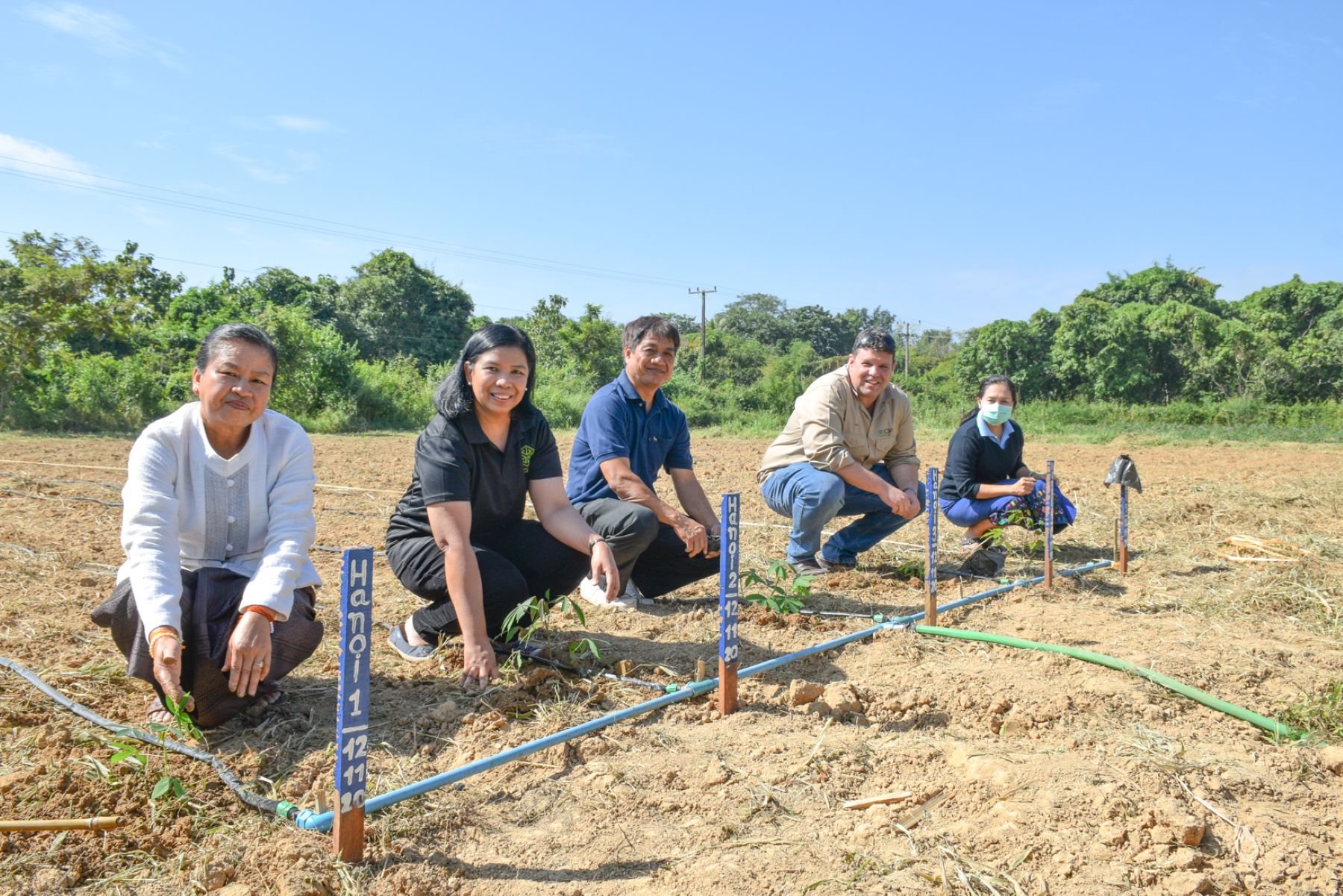
New cassava varieties are planted in Laos as part of ACIAR-funded research.
Dr Newby, an agricultural economist, has contributed to more than 10 ACIAR projects over 15 years, analysing incentives from plot scale or household level to community, regional and national levels.
‘Understanding the economics from the plot scale through the value chain can help identify incentives for people to engage with innovation and development,’ said Dr Newby.
His work on cassava since 2018 includes 2 major ACIAR projects. Global demand for cassava is growing, with potential profits for smallholder farmers in Laos often exceeding urban wages, encouraging rural resettlement. However, long-term prospects for cassava are under threat.
Across 2 ACIAR projects (ASEM/2014/053 and AGB/2018/172), Dr Newby has sought to make cassava cropping more sustainable and resilient to disease, particularly cassava witches’ broom disease and cassava mosaic disease. This has included introducing resistant varieties and developing a clean-seed system with Lao partners.
Dr Newby said while farmers can easily adopt new varieties, surveillance, diagnostics, quarantine and agricultural extension services are crucial to combating disease and protecting livelihoods.
Image
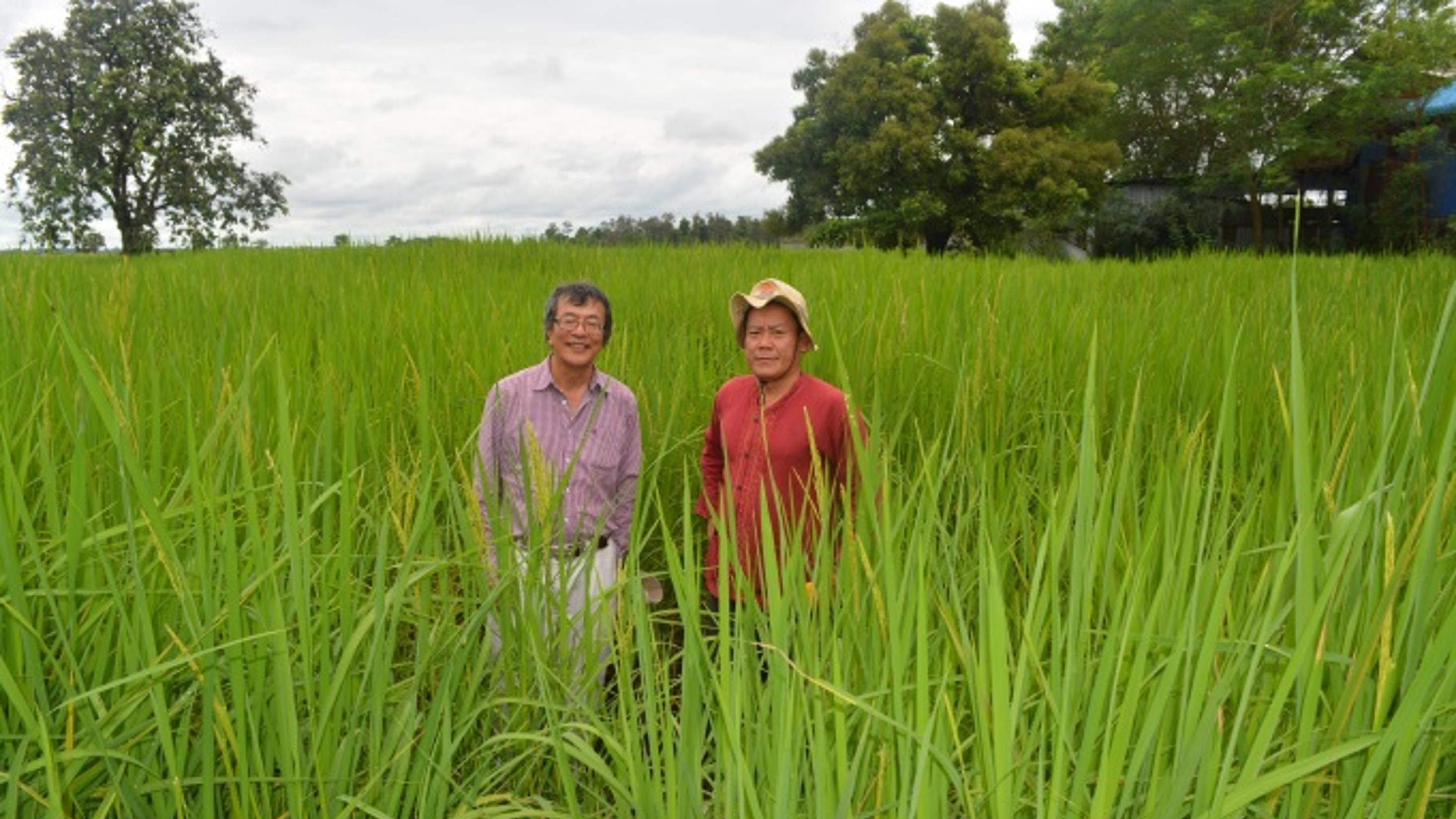
Dr Shu Fukai (left) with Dr Phemanyseng Xangsayssane, Acting Director General, National Agriculture and Forestry Research Institute, Laos. Photo: Shu Fukai
Transforming rice production
Dr Shu Fukai from the University of Queensland has led rice projects in Laos for more than 20 years, improving quality and yield.
Most farmers in Laos relied on rainfall to fill their rice paddies. However, variable rainfall often meant crops became water-stressed and yields were low.
‘Initially, we were trying to find rice varieties that could withstand drier conditions, to minimise the adverse effects of drought,’ said Dr Fukai. ‘We found varieties suited to Laos in Thailand. Both countries grow glutinous rice, which isn’t widely grown in most other countries.’
Dr Fukai said farmers were quick to adopt improved varieties. Through evolving projects, they became involved in research and the variety selection process, identifying characteristics with practical benefits. New varieties have enhanced drought resilience, disease resistance and yield.
However, it was research into changed farming practices that drove the greatest advances in yield and rice quality. These included directly seeding rice rather than transplanting seedlings, using fertiliser, mechanical harvesting and machine drying.
‘While many smallholder farmers in Laos can’t afford to buy a harvester, there are now many harvesting contractors,’ he said. ‘Machine drying also greatly improves the quality of the rice, which often cracks if it is left in the sun on the ground to dry. It also reduces contamination and therefore improves quality.’
ACIAR projects complement research at the International Rice Research Institute and projects funded by the Australian Department of Foreign Affairs and Trade, strengthening Laos’s research capacity. Associate Professor Jaquie Mitchell has taken over from Dr Fukai at the University of Queensland and now leads ongoing ACIAR rice research in Laos.
Image
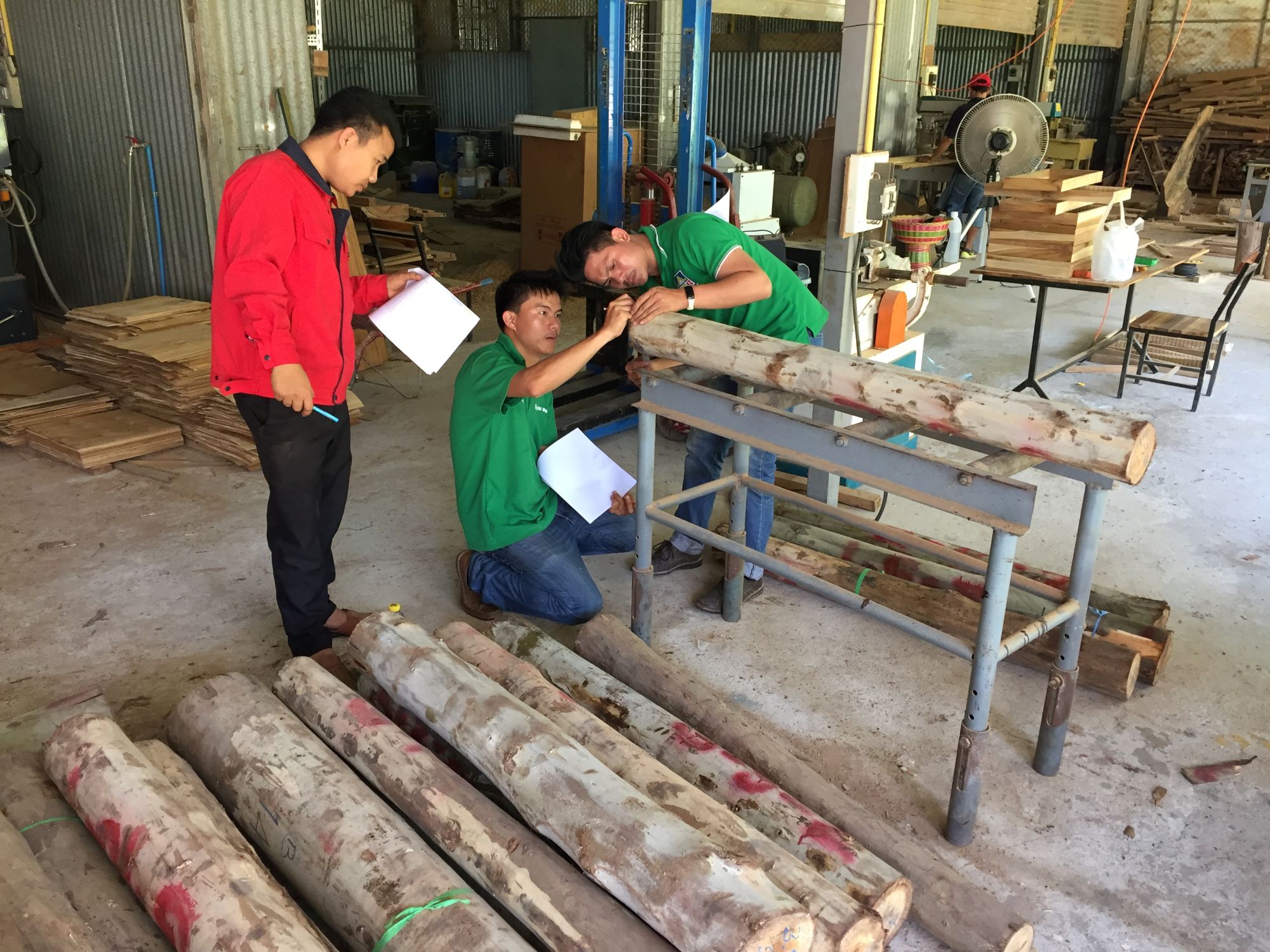
Understanding of drying and manufacturing techniques, design and timber properties has enabled processors in Laos to produce higher quality products for domestic and export markets. Photo: Barbara Ozarska
From plantations to value-added wood products
Wood technology scientist Professor Barbara Ozarska at the University of Melbourne and her team have helped Laos add value to its expanding timber plantations.
Through a series of ACIAR projects, Professor Ozarska’s work has improved the processing sector’s understanding of drying and manufacturing techniques, design and timber properties, enabling higher quality products for domestic markets and export.
The first project built capacity by establishing a wood technology laboratory and reference library at the National University of Laos.
Later projects took a value-chain approach, identifying barriers and opportunities for growers and processors. This included confirming the potential for veneers and engineered wood products from rubberwood. Most of Laos’s rubber plantations will reach the end of their productive life in the next 5 years, providing a new wood resource and income source for growers.
Trials have introduced new technologies and safe work practices. Processors adopting these techniques have been able to better use plantation teak and eucalyptus and create new market opportunities with higher returns (FST/2016/151). Research has also supported earlier tree harvesting, allowing smallholder growers to generate income sooner.
‘We worked with the government to reduce transaction costs, streamline certification and develop policies to support smallholder growers, in particular, and to improve production efficiencies for processors,’ said Professor Ozarska.
Many Lao forestry researchers trained through these projects now hold senior roles in government and universities.
Research partnerships
ACIAR Southeast Asia Regional Manager Mr Ounheuan Saiyasith said these scientists are among many who have provided a strong foundation for Laos’s future.
‘Celebrating the 35-year milestone provides an opportunity to reflect on the outcomes that have been achieved through collaboration between ACIAR and Laos,’ said Mr Saiyasith.
‘Each of these researchers has helped to skill new generations of scientists in Laos. These celebrations are also a chance to look forward at where we want to be in 20 or 30 years from now. We will be able to build on the solid partnerships we have developed with hundreds of researchers in Laos, in Australia, and in other countries, and continue towards ensuring food security and improving livelihoods.’
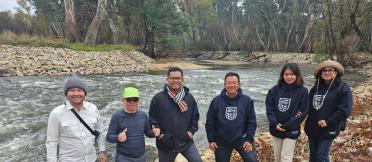
Researchers from Vietnam, Cambodia, Laos, Thailand and Indonesia visited Australia to examine how Australia mitigates the impacts of irrigation infrastructure on fish populations.