Date released
04 September 2026

We feel as if we are being listened to.

Ms Sajeela.

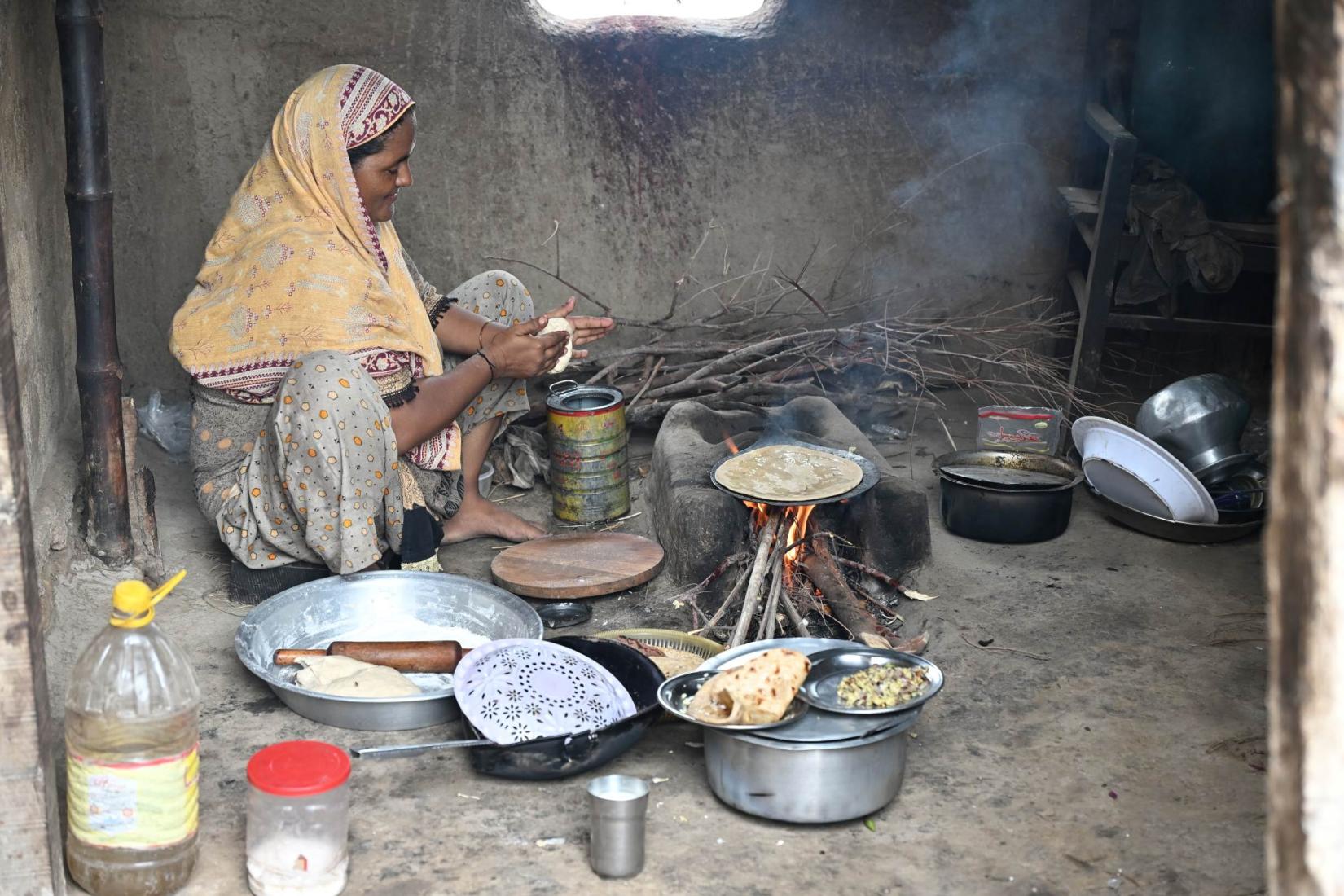
This is the view of Ms Sajeela, from Khalifo Ahmed, a village in the Pakistani province of Sindh. She is reflecting on an ACIAR-supported small research activity, ‘Community-led and stakeholder-engaged adaptation processes for Southern Pakistan’, led by the University of Canberra with support from the Australian Government Department of Foreign Affairs and Trade. This activity aimed to strengthen adaptive livelihoods in the face of climate change. It focused on developing tools to support adaptive farming practices or, where a changing climate made farming no longer viable, transformative solutions such as migration, small enterprise development and skills development for farmers.

The sentiment was echoed by many during a recent end-of-project review, led by Dr Sandra Heaney-Mustafa from the University of Canberra. Across three villages, men and women described how project partners first asked people about their challenges, priorities and ideas, rather than arriving with ready-made solutions. This allowed villagers to become active participants in identifying solutions and shaping their own future.
Image
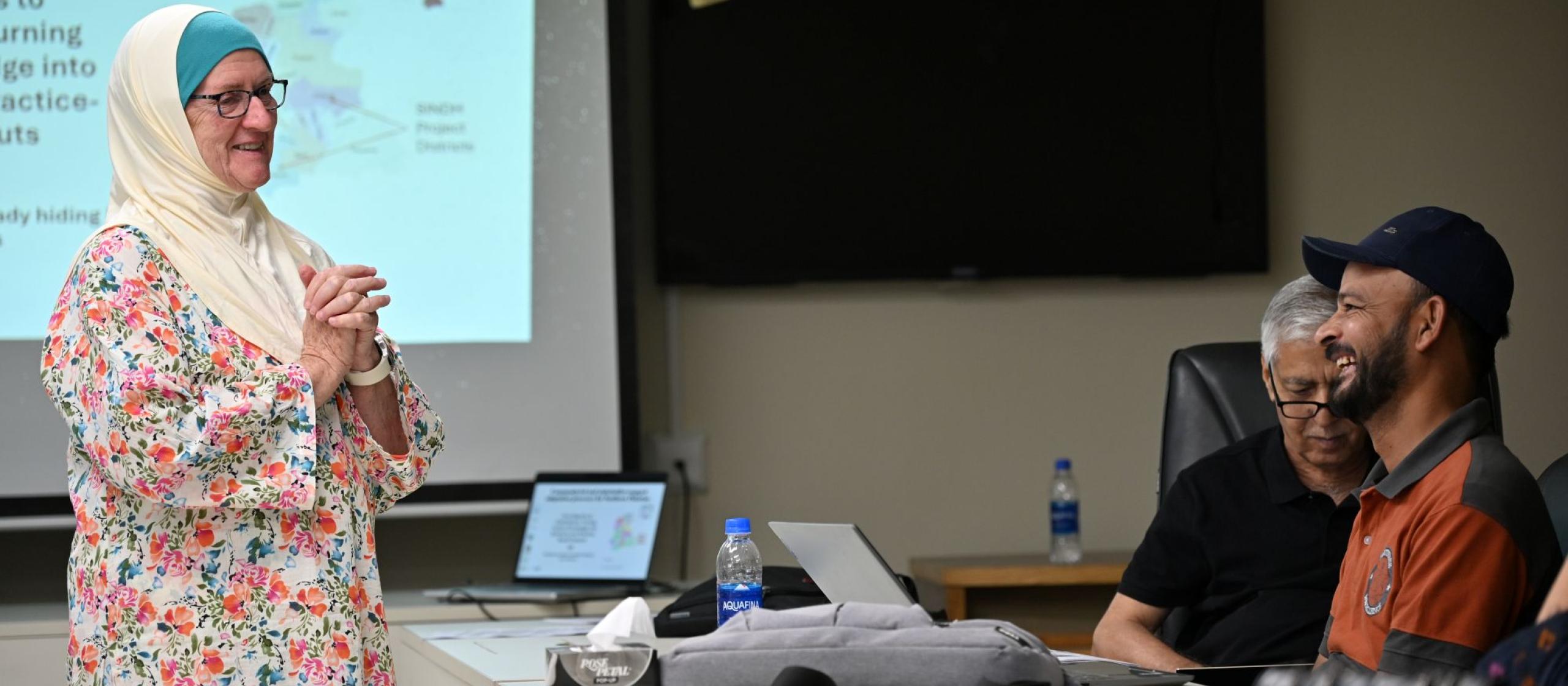
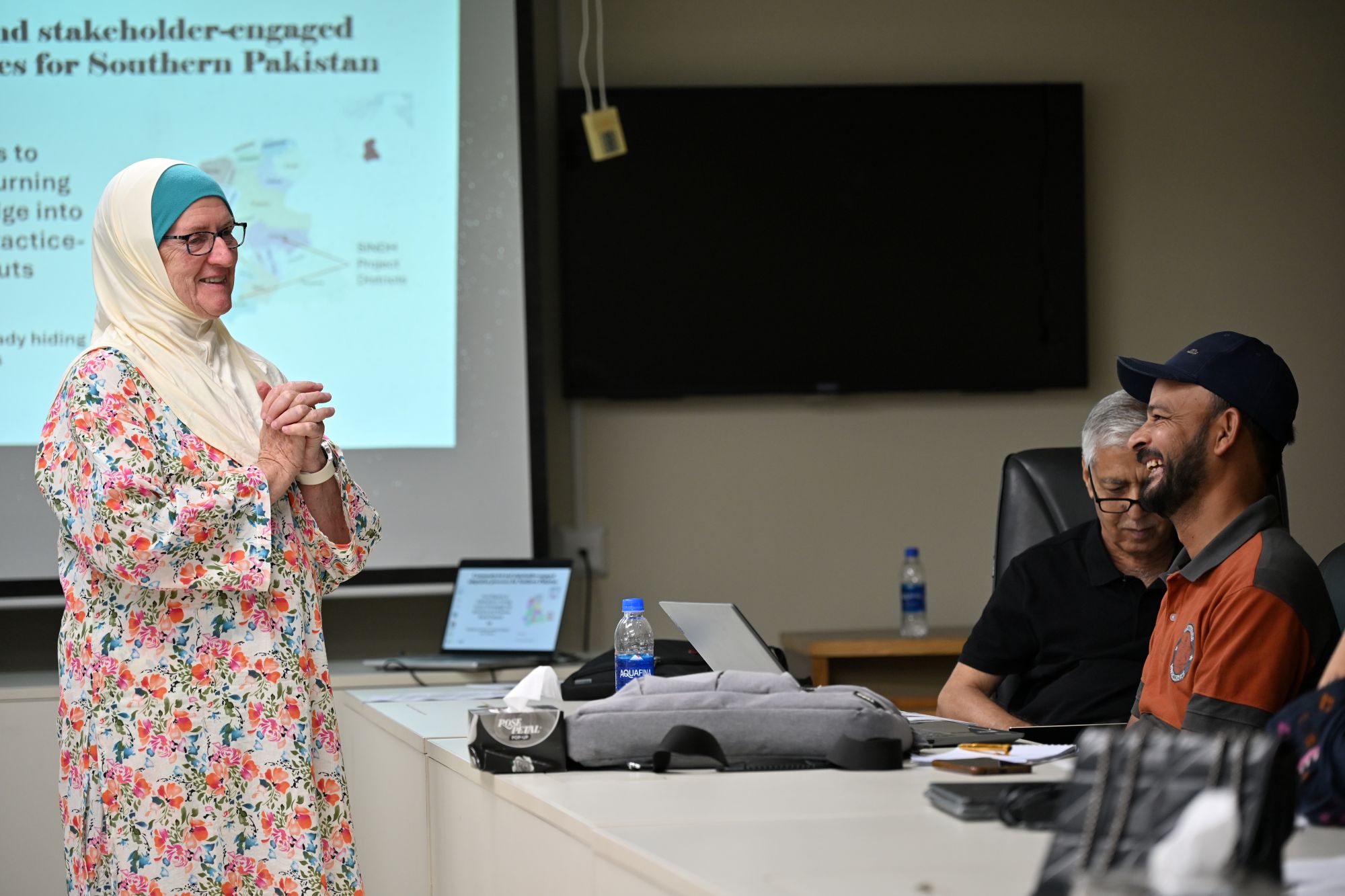
Participant speaking during a workshop while others listen around a meeting table.
Dr Sandra Heaney-Mustafa at a workshop at the Mehran University of Engineering and Technology's US-Pak Centre for Advanced Studies in Water.

Learning before teaching

The approach grew from an understanding that farmers often placed greater trust in other farmers than in outside specialists.

Project teams responded by testing different learning models and asking recipients what worked, what did not and what they wanted to see change. This resulted in a framework developed for local farmers, by local farmers, and within local contexts.

‘This feedback helped shape an approach that recognises farmers as researchers and teachers, not only as recipients of information,’ said project leader Dr Heaney-Mustafa. ‘It was through these elements coming together that we were able to develop the Farmer Integrated Learning Model (FILM).’

FILM is a 3-step learning process that helps communities and project partners work together, listen to each other and adapt over time. First, the team learns about the community, local context and people involved. Next, everyone works together to agree on the main issues and plan what to do. Finally, they carry out the actions, check what worked, and use what they learn to improve the next steps. 

Project members from the Society of Facilitators and Trainers (SOFT) trained in this model and shared it with farming communities across Sindh, ensuring women and teenagers were included. Over time, this cycle of trying, reflecting and adapting helped FILM develop into what is now called Community-led Stakeholder Engagement for Adaptive Transformation, or CoSEAT.

By giving farmers full ownership of the very model they helped pioneer, the approach can be shared far beyond the communities where it was first conceived. Today, they report women who had never previously left their villages now accompany their husbands and help train other farmers. 

Communities identify their priorities

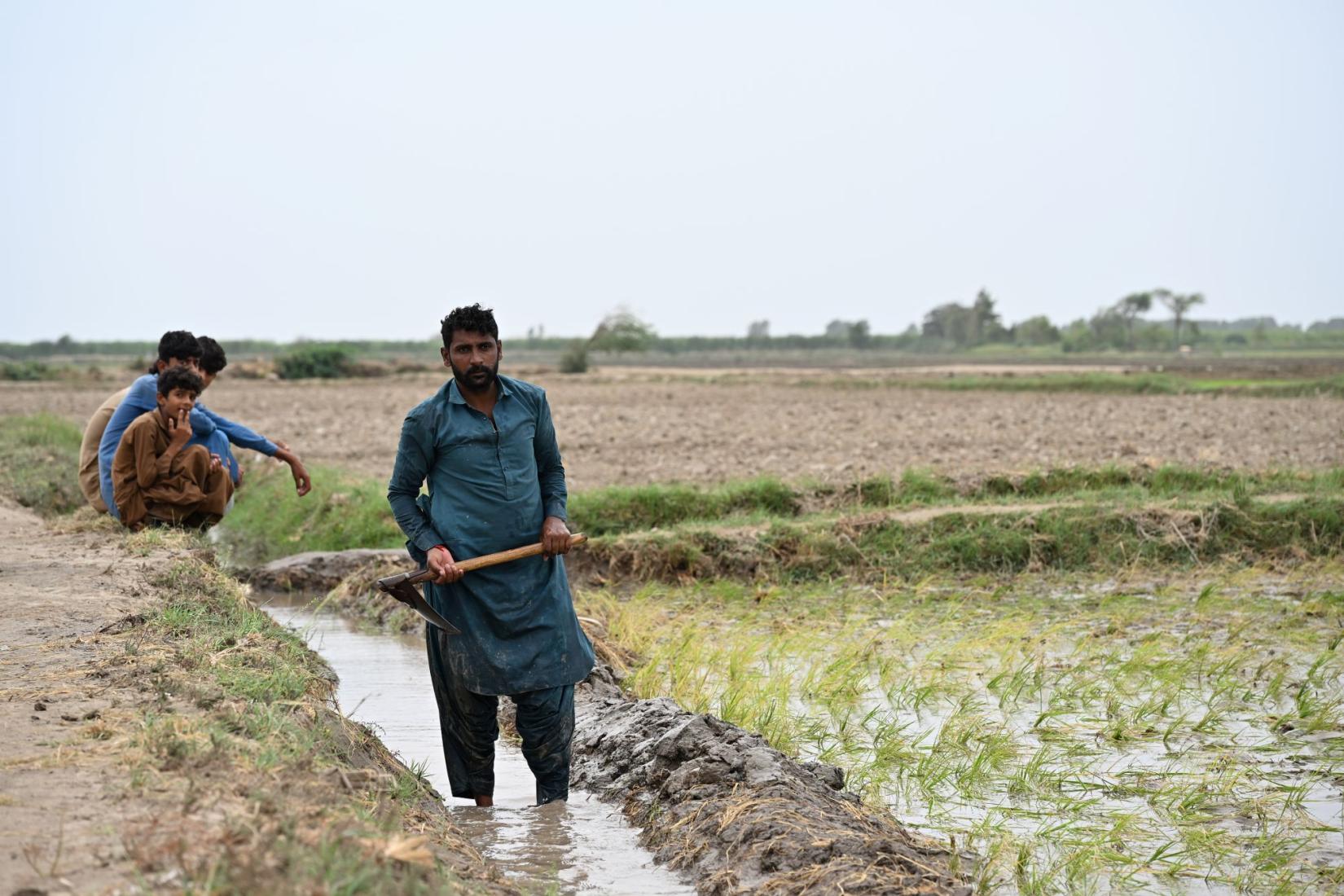
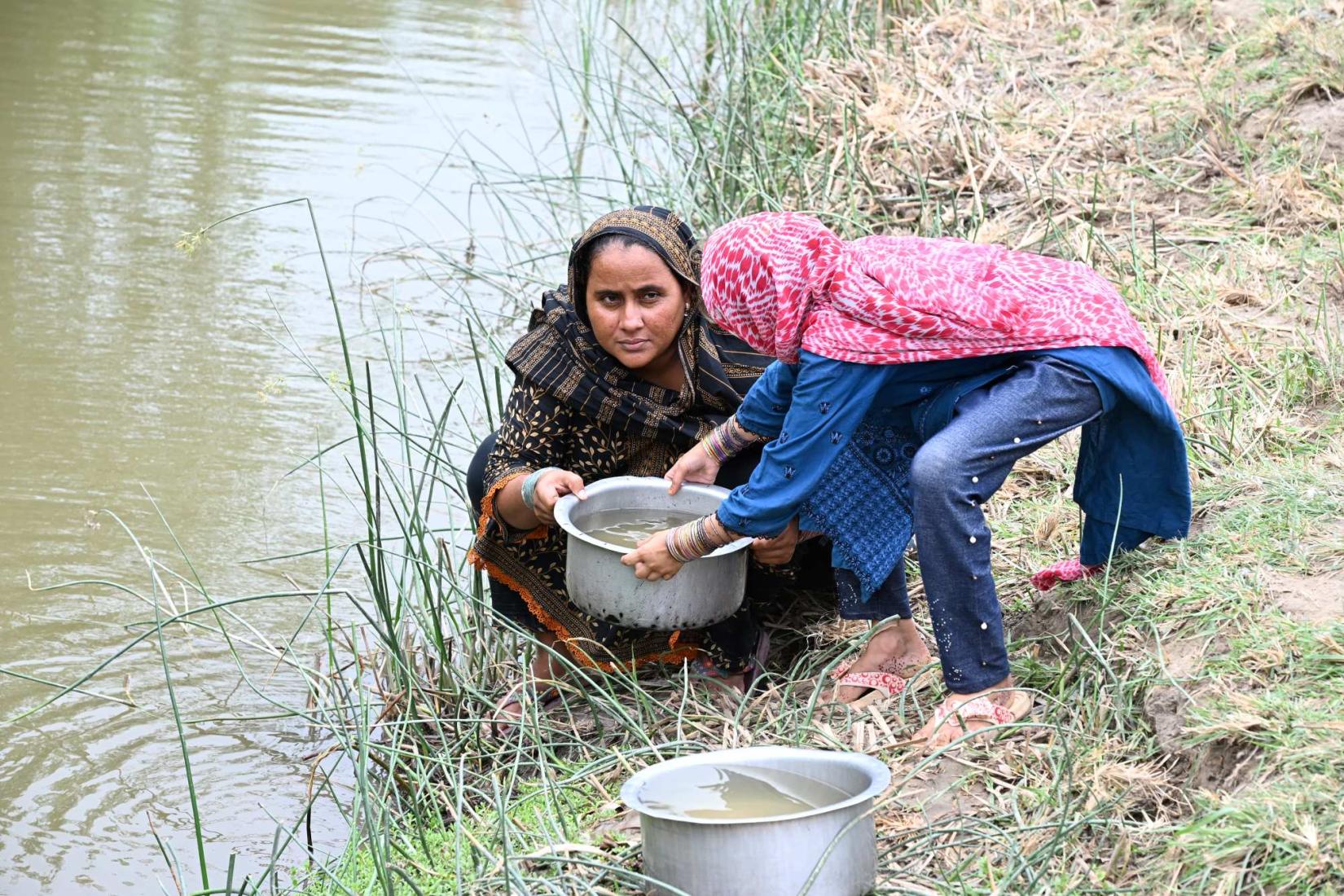
At Fateh Muhammad Arain, villagers spoke candidly about rising agricultural input costs and the pressures of a changing climate, particularly given the devastation of the 2022 floods that ravaged Sindh. Conditions in the village were also precarious due to a nearby dam causing frequent waterlogging in the surrounding fields.

We needed to prioritise our top issues and come up with an action plan quickly.

Mr Shafiqe Ahmed
Farmer and project participant.

Farmers like Mr Ahmed utilised their training. Despite some initial resistance to change, they reached collective agreements on how best to allocate the village’s resources. This, in turn, led to a considered approach that took unpredictable climate conditions into account when selecting which crops to plant in the coming seasons.

Mr Imran Arain, a village elder, is adamant that the villagers will continue to iterate on and refine the approach to meet their needs. ‘We are not passive beneficiaries. We will contribute to everyone’s knowledge based on our own experiences.’

Building ownership

In Khalifo Ahmed, residents described the sense of ownership that came with adopting this approach to decision-making. Since it was designed with local contexts in mind, they quickly found that its applications extended far beyond agriculture.

‘We have found that this participatory approach can be utilised in our own households,’ remarked Mr Niaz Hussain, a local farmer. ‘It need not be limited to fields or pieces of machinery.’

‘You sat with us and asked us about what we wanted,’ recalls Mr Ghulam Ali, one of the village’s spokespersons. ‘Usually, we are used to nobody asking about our opinion.’

The confidence to make decisions collectively and to recognise the value of local knowledge is a key outcome of this approach. 

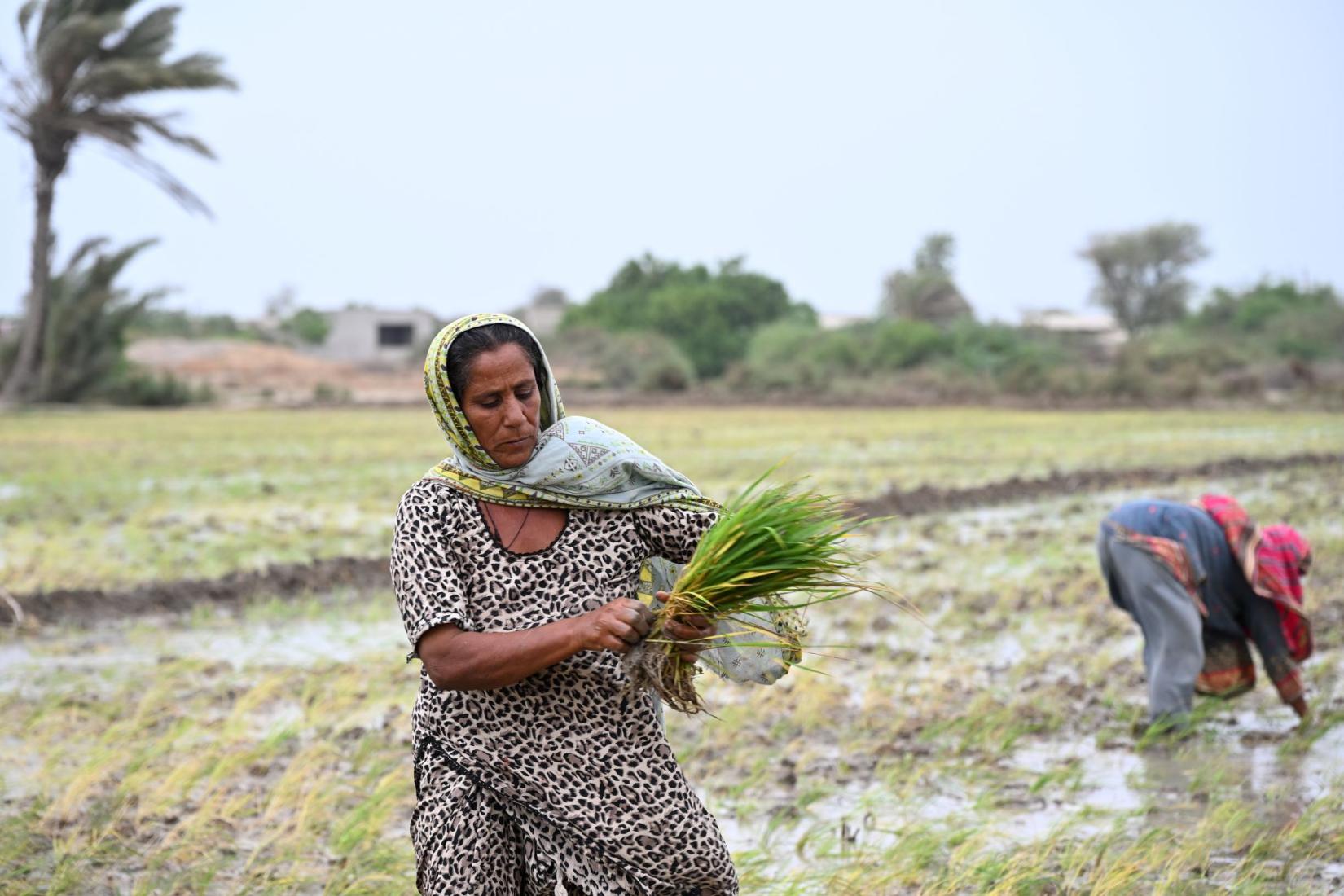
This, in turn, allowed communities to begin addressing deeper, long-standing social issues within their own communities. Among other things, it highlighted the significant and often unacknowledged role played by women in Pakistan’s informal agricultural sector.

Women and young people help to shape the future

In Fateh Muhammad Soomro, Ms Mehrun Nissa and Ms Naila spoke for their community during a gathering in a school building, describing how the learning method had helped them to gain a sense of their own progress.

Children are our future. They will inherit the world we leave behind.

Ms Naila
Community member from Fateh Muhammad Soomro

The visit also highlighted the voices of two young community champions. Both high school students, Miss Amber is Fateh Muhammad Soomro’s Health and Hygiene Champion and Miss Sobh is the village’s Climate Change Champion. 

Their participation stands as an example of what an approach that begins with listening can make possible. It creates space not only for established community leaders, but also for women and young people to contribute to decisions about their future.

‘My hopes for the future were written on the faces of the young girls we met,’ says Dr Heaney-Mustafa when remembering Miss Amber and Miss Sobh. ‘This way of learning and working will ensure that all children grow up with a sense of personal agency. 

Looking ahead

During the final stakeholder consultation and project evaluation at the US-Pakistan Centre for Advanced Studies in Water at Mehran University of Engineering and Technology, representatives from all three villages provided input. 

They explained how participatory decision-making had moved beyond agriculture, helping them address household and wider community challenges. Even villages that had joined the project more recently were already adapting the approach to their own needs.

This helped the team review progress and consider how to shape future activities in Sindh.

‘This project shows the value of beginning with communities and listening to what they need. The guidance developed and lessons learnt from this project have now been incorporated into a new planned ACIAR investment in Sindh, expected to commence later this year. We are excited to work with local partners who are now able to deploy these approaches,’ said Dr Neil Lazarow, ACIAR Research Program Manager Water.

Read more about ACIAR’s work in Pakistan here.

This activity was co-funded by the Australian Government Department of Foreign Affairs and Trade (DFAT).