Shared challenges
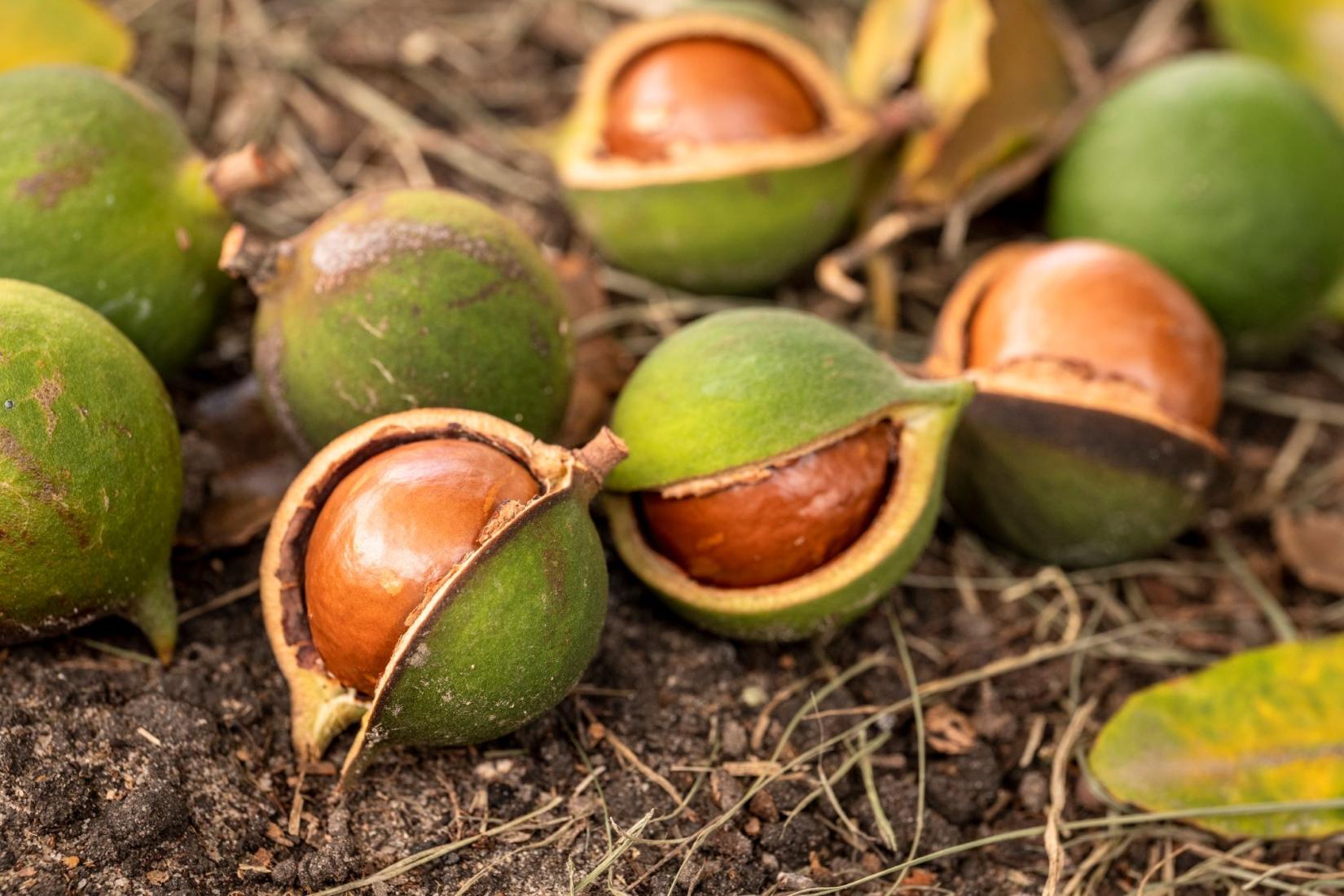
Macadamias are native to Australia, which is the third largest producer of macadamias globally. The international market is growing at the rate of 10% a year. Australia’s 800 growers produce a crop worth up to $300 million a year at the farm gate, depending on the season. About 25% of the crop is sold domestically and 75% is exported to 40 countries around the world. The industry includes 15 processors.
‘But we face a lot of international competition, so it’s really important to maintain our provenance and our quality edge, particularly over countries with low-cost production,’ said Ms Leoni Kojetin, Industry Development Manager with the Australian Macadamia Society.
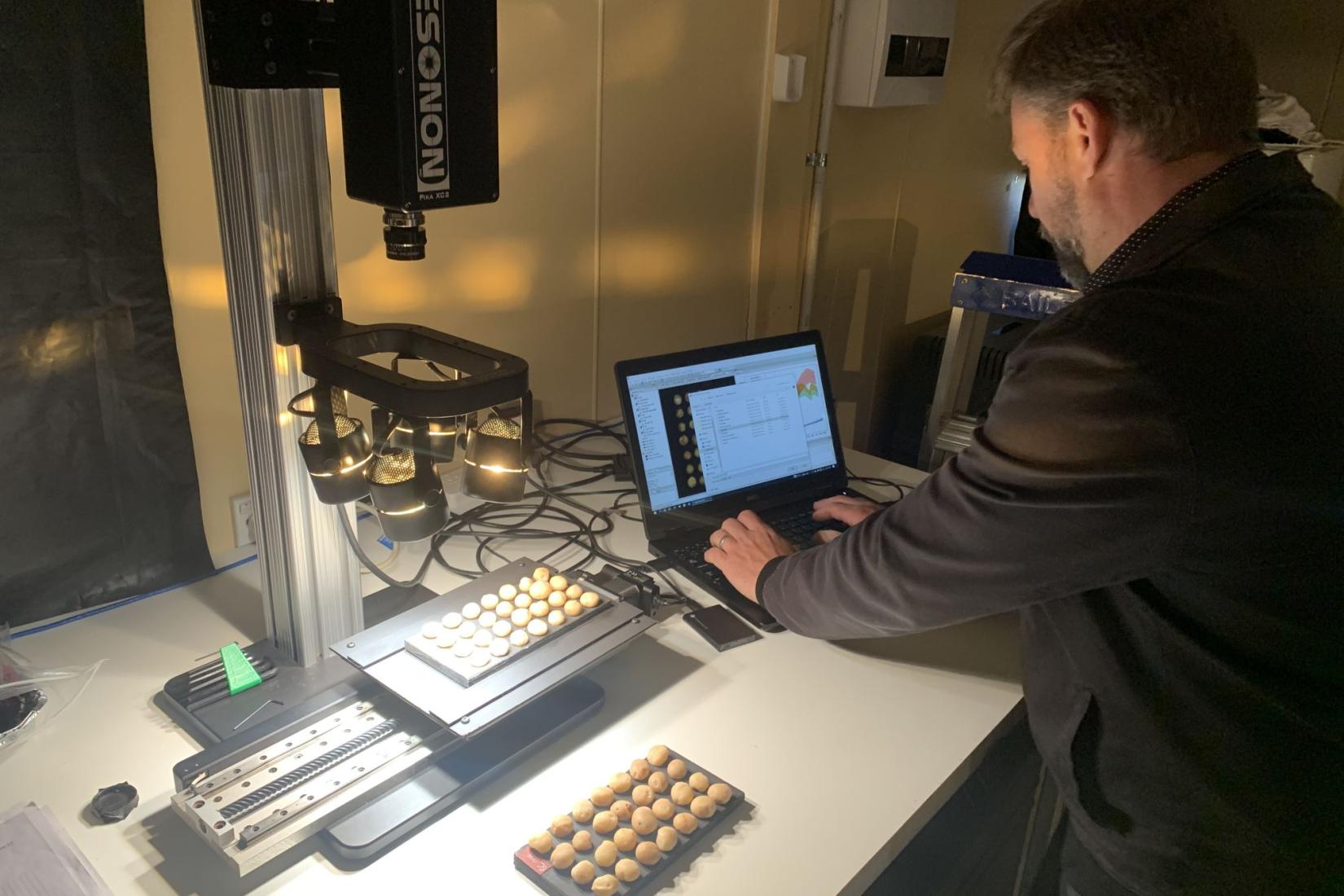
‘Several commercial processors helped to design the proof-of-concept trial [using the hyperspectral technology], working with Griffith University. Each one is now working individually with different imaging technology partners on designs to incorporate the technology into their processing facilities.’
Ms Kojetin said hyperspectral imaging could identify a range of quality parameters quickly, efficiently and accurately, without having to destroy nuts in the testing process.
We have far less waste in the system, and the testing itself is faster. The technology also had the potential to scan every nut, rather than just a sample of larger batches, as is often done. It will give us a much greater confidence in our quality.
Ms Kojetin indicated further research would look at how machine learning could be used to improve the quality analysis and correlate it with other invisible characteristics important to consumers, such as butteriness, texture, crunch and taste.
‘Further advances might allow these characteristics to be assessed in conjunction with growing conditions to provide feedback to growers. The stronger the correlations we can make between seasonal conditions and quality parameters, the easier it will be for growers to do a better job, and the better we can protect our market advantage,’ said Ms Kojetin.
ACIAR Projects: ‘Developing markets and products for the Papua New Guinea Canarium nut industry’ (FST/2010/013); ‘Enhancing private sector-led development of the Canarium nut industry in Papua New Guinea’ (FST/2014/099); ‘Enhancing private sector-led development of the canarium industry in Papua New Guinea (Phase 2)’ (FST/2017/038)