


Australia-Pacific partnership strengthens bee health and honey industry development in Fiji
20 November 2026
The beekeeping industry across Australia and the Pacific is facing increasing pressure from pests and diseases that threaten honey production and beekeeper livelihoods. The ongoing threat of economically significant pests – including Varroa mite, American foulbrood disease, Apis cerana (an invasive bee species) and small hive beetle – highlights the need for stronger biosecurity systems and collaborations across the region.
Through an ACIAR-supported partnership, Fiji's beekeeping industry, government agencies and biosecurity authorities are working together to strengthen bee health and improve biosecurity preparedness.
One of the most visible outcomes of this collaboration is the Fiji Bee Pest and Disease Awareness Drive, launched recently at the Fiji Agriculture Show in Labasa, Fiji. The initiative marks Fiji's first coordinated effort to address bee health and biosecurity challenges through a partnership between the Fiji Beekeepers Association (FBA), the Ministry of Agriculture, Waterways and Sugar Industry (MOAWSI) and the Biosecurity Authority of Fiji (BAF).
Speaking at the launch, Fiji’s Minister of Agriculture, Waterways and Sugar Industry, Honourable Tomasi Tunabuna said beekeepers will have greater access to practical and technical information on bee pests and diseases, with an initial focus on Varroa mite and American foulbrood.
‘Fiji may be geographically isolated, but in today’s world we are only one boat, one shipment or one piece of contaminated equipment away from a new biosecurity threat. That is why preparedness matters,’ he said.
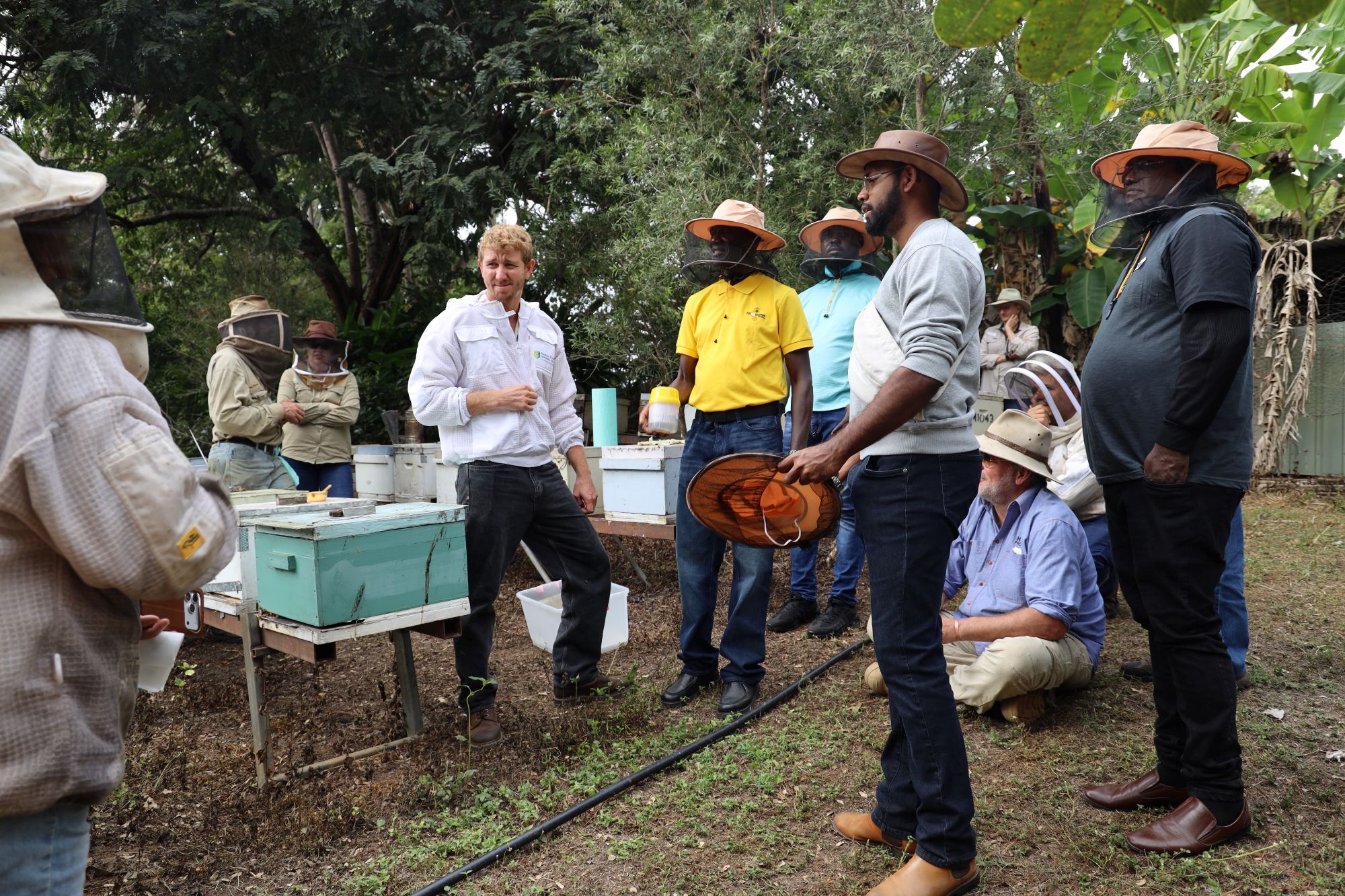
The campaign emerged from the ACIAR-supported Evaluating an alternative approach to sector development in Pacific island countries project implemented by Southern Cross University and Talanoa Consulting. Through the project, representatives from Fiji's beekeeping industry and government agencies travelled to Australia in June 2026 to learn from leading biosecurity organisations, researchers and beekeeping enterprises.
The learning exchange provided practical experience in pest surveillance, disease detection and management, industry governance and beekeeper education. Delegates also gained firsthand exposure to Australia's biosecurity response systems, including approaches used to manage Apis cerana incursions and other emerging threats to honeybee populations.
Southern Cross University researcher, Dr Anneliese Austin said Australia’s experience with Varroa mite shows how difficult and costly it can be once a serious pest becomes established.
‘I hope this collaborative program helps Fiji strengthen its capacity to prevent new bee pests and diseases and protect the future of its beekeeping industry,’ said Dr Austin.
Fiji’s beekeeping industry
The initiative arrives at an important time for Fiji's beekeeping sector. The industry is largely driven by smallholder producers, with government statistics indicating that around 1,000 registered beekeepers manage approximately 12,500 hives and produce more than 100 metric tonnes of honey annually. Beekeeping provides an important source of supplementary income for many rural households while contributing to crop pollination, and food and nutrition security.
Project co-leader with Talanoa Consulting, Ms Salote Waqairatu-Waqainabete said the industry still has significant potential for growth despite challenges posed by Varroa mite infestations and other production and industry constraints.
‘Fiji has strong domestic demand for honey and beekeeping inputs, and there is untapped potential to export high-value niche marketed honey and value-added beeswax products,’ said Ms Waqairatu-Waqainabete.
‘However, quality assurance processes, packaging, marketing, branding and beekeeping business skills remain under-developed.’
To address these opportunities, the project is supporting activities that extend beyond biosecurity. In partnership with previous ACIAR investments in Pacific beekeeping industries, project partners have undertaken market assessments and developed training materials on honey branding and packaging. They are also developing honey quality assurance guidelines and creating business record-keeping tools for beekeepers. The project is also building capacity to strengthen skills needed by research partners for sustainable and impactful collaboration between industry, Government and additional key stakeholders.
Image
Another key outcome from the project has been the introduction of new skills in honey sensory assessment and product differentiation.
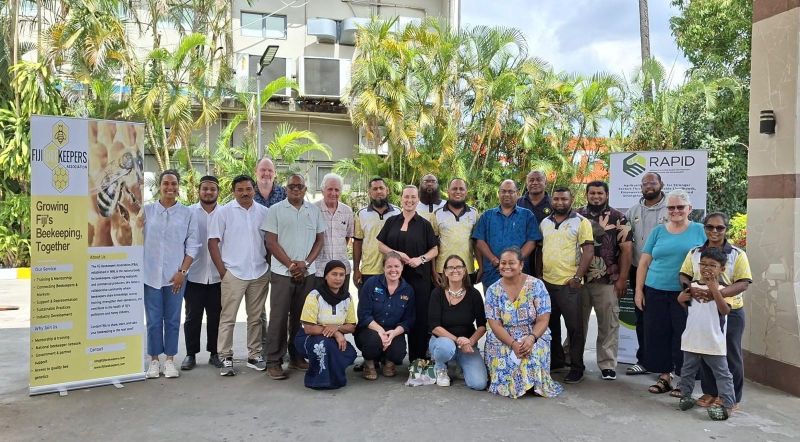
In September, Australia's first internationally certified honey sommelier, Ms Jessica Locarnini, visited Fiji to deliver a two-day honey judging and sensory profiling workshop for local beekeepers. The workshop introduced participants to internationally recognised techniques for assessing honey quality, flavour profiles and market characteristics.
‘This workshop helped me see honey from a completely different perspective,’ said beekeeper Ms Atrul Nisha.
‘As beekeepers, we often focus on production, but this training helped us understand how to assess quality and identify different flavour profiles and how to communicate the unique characteristics of Fiji’s honey to consumers. It opened my eyes to the opportunities for adding value to our products.’
For Ms Locarnini, the highlight for her was seeing Fiji’s beekeepers take the time to taste their own honey and each other’s and compare what they noticed and share feedback.
‘There were a few raised eyebrows at first, but with a little encouragement to trust their palates and a few tools to help them put what they tasted into words, everyone found they could do it,’ said Ms Locarnini.
‘Hearing them compare their first descriptions with the detail and confidence they brought to the same honeys by the end of the day was incredible. I can’t remember being prouder of a group’s enthusiasm and engagement. They care deeply about their bees and their industry; the honey we tasted was world-class.
‘There’s real strength in this community, and I'm sure they'll keep using these skills to learn from each other long after the workshop. I'm confident the Fijian Beekeepers will continue to assess and monitor the flavours being produced locally and as a result, will continue to celebrate the unique characteristics of Fijian honey to give it the attention and value it deserves.’
For ACIAR, the Fiji experience demonstrates how targeted investments in research partnerships can generate practical outcomes for smallholders. ACIAR Research Program Manager Agribusiness, Dr Jack Hetherington, said effective industry organisations and strong collaboration with government are critical to inclusive and sustainable sector development.
‘Through this partnership, ACIAR is supporting industry organisations and their government partners to strengthen their capacity, develop sustainable business models and deliver practical services that benefit smallholders. We are already seeing this in action through the Fiji Bee Pest and Disease Awareness Drive, which brings industry and government together to strengthen biosecurity preparedness, alongside efforts to improve the quality and marketability of Fiji’s honey products,’ he said.
As pests and diseases continue to threaten bee industries across Australia and the Pacific, collaboration will remain essential. Through knowledge exchange and strengthened biosecurity systems, the Australia-Pacific partnership is helping Fiji build a more stronger beekeeping sector that supports livelihoods and future economic opportunities.
Read more about ACIAR’s investment in the Pacific.
