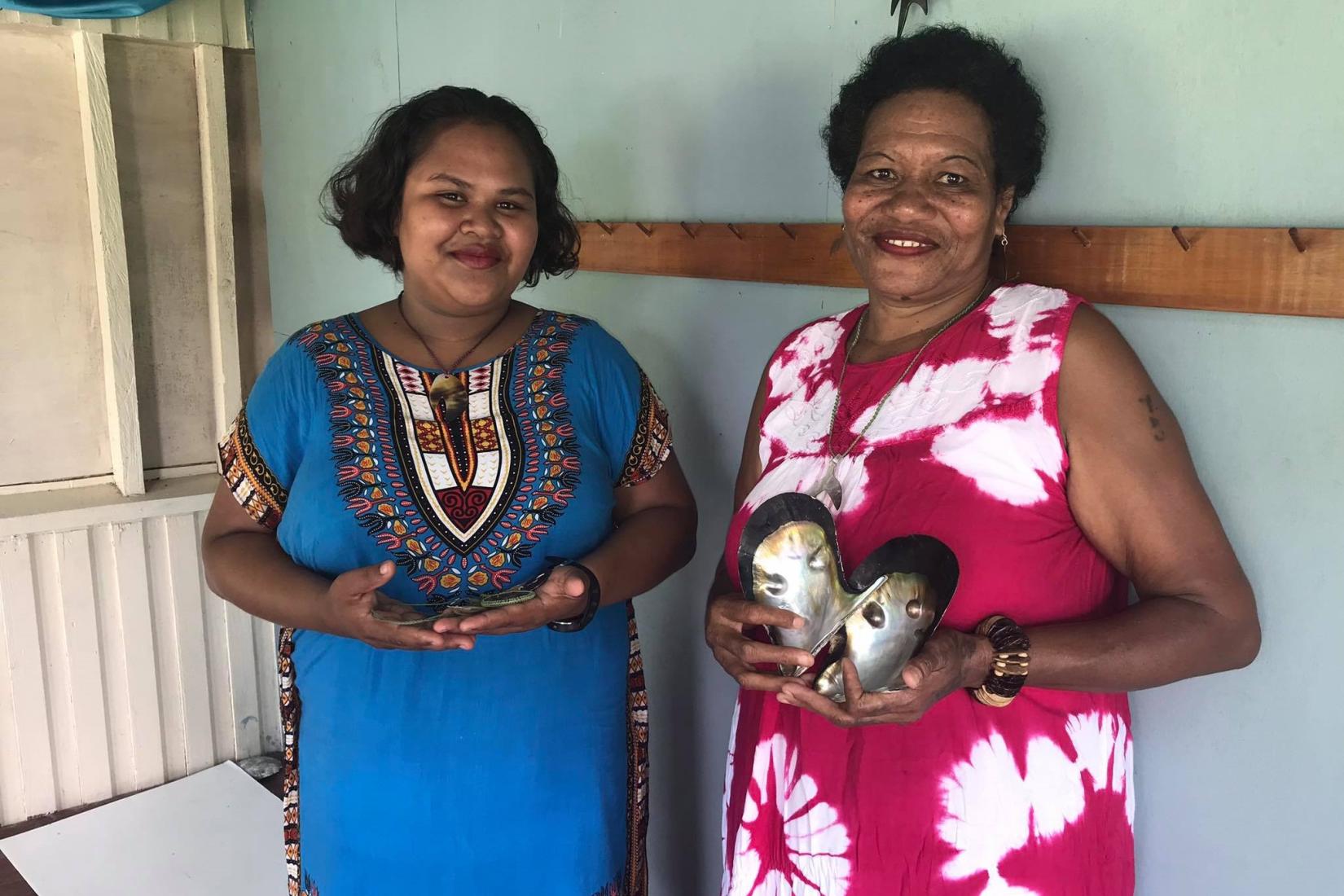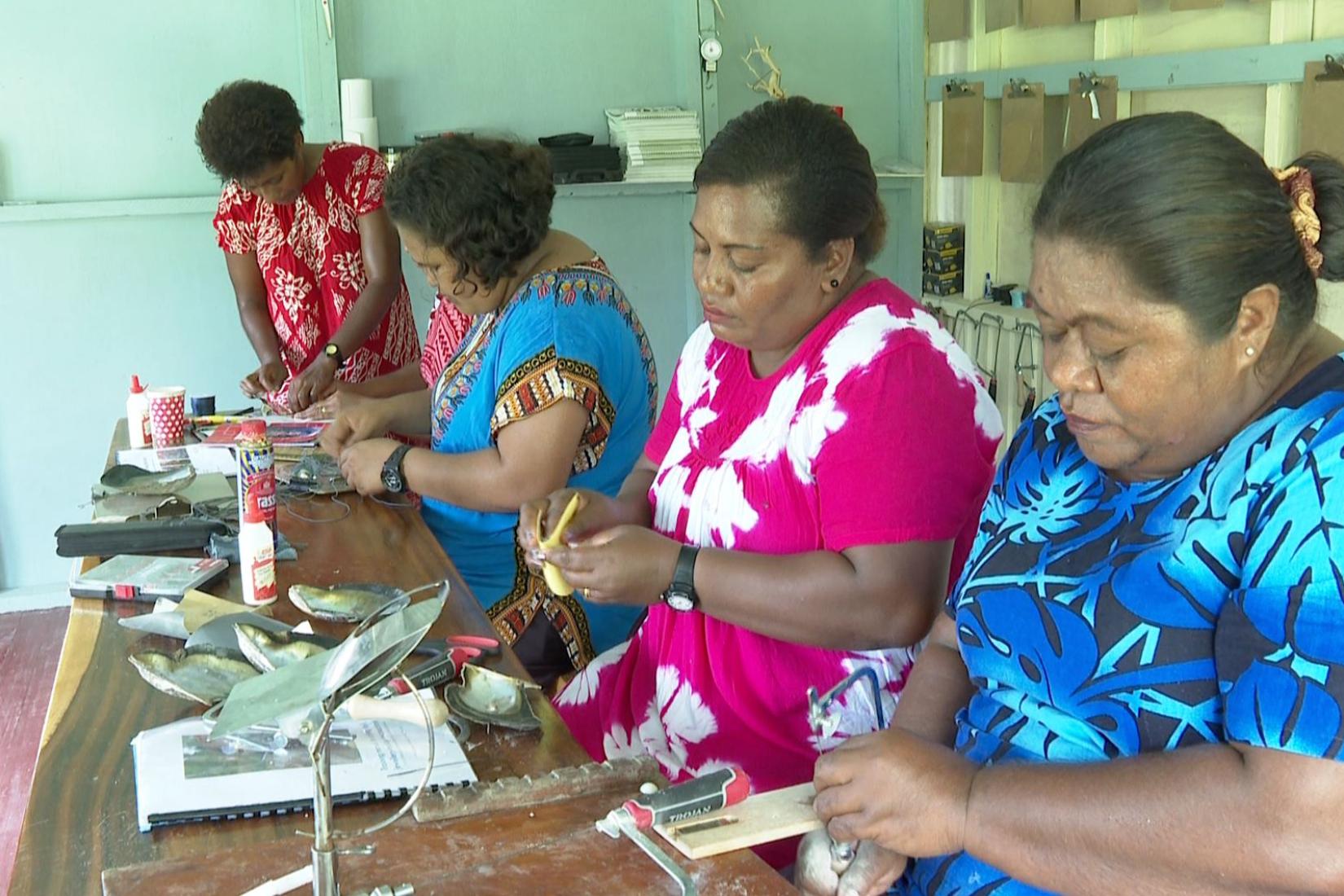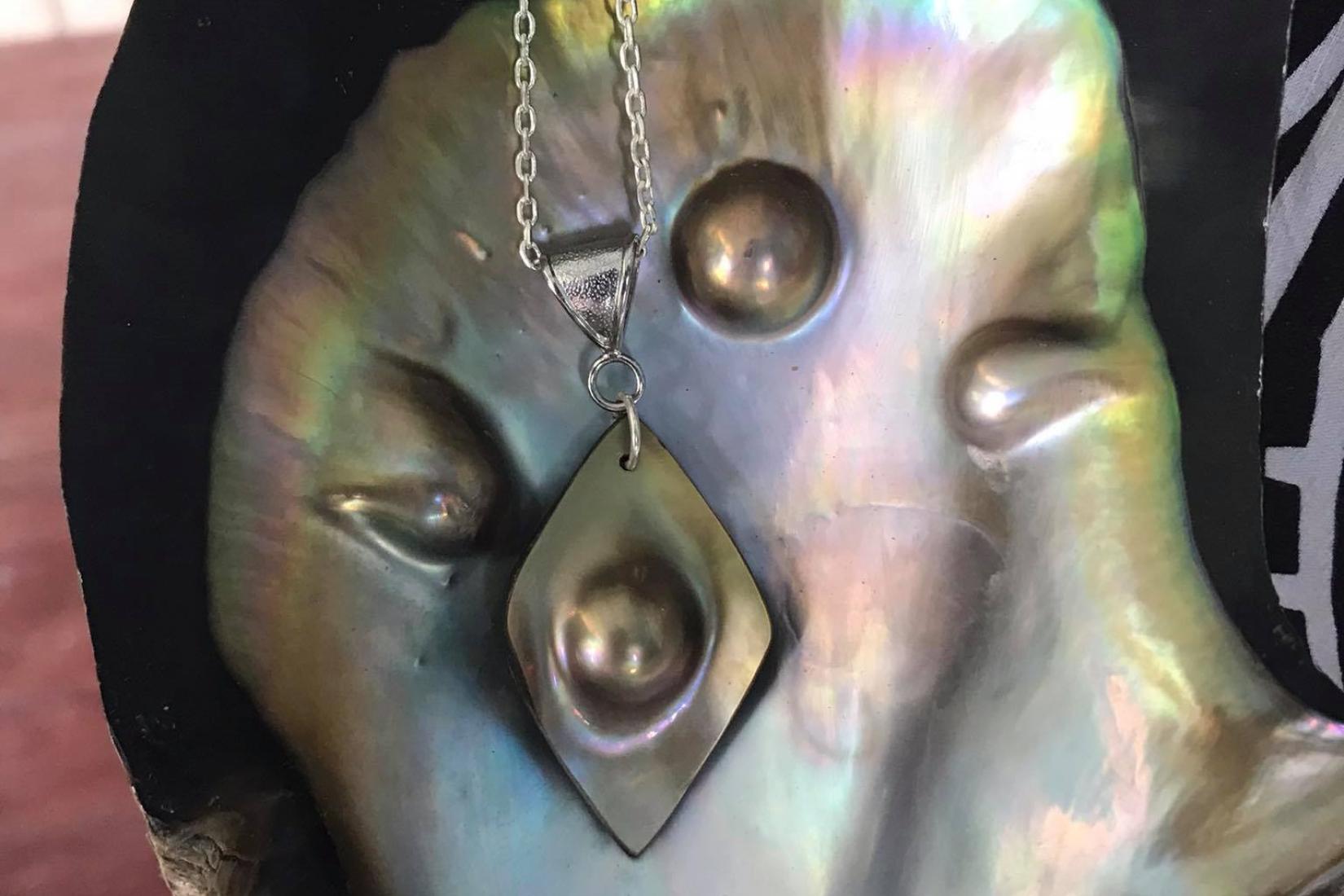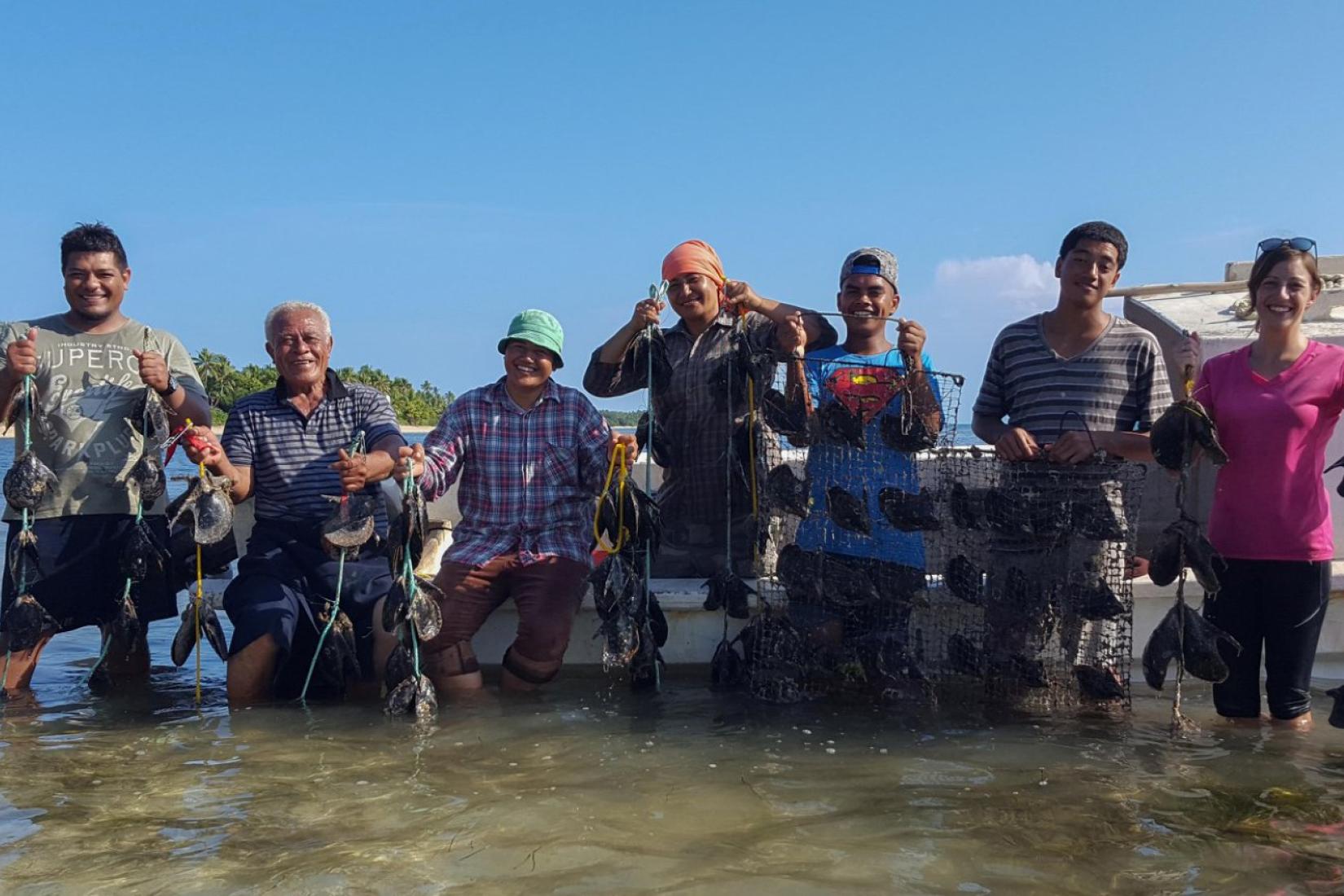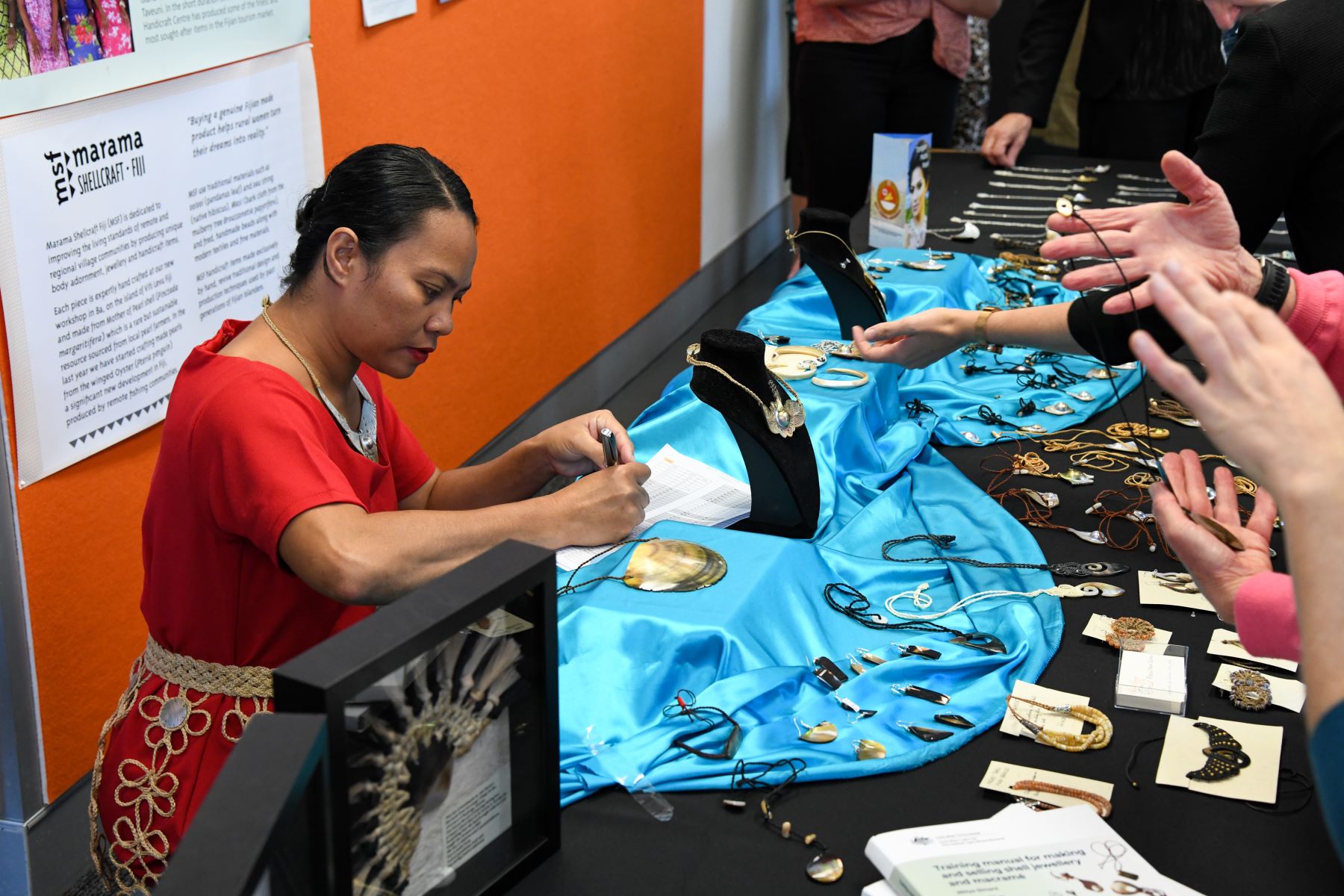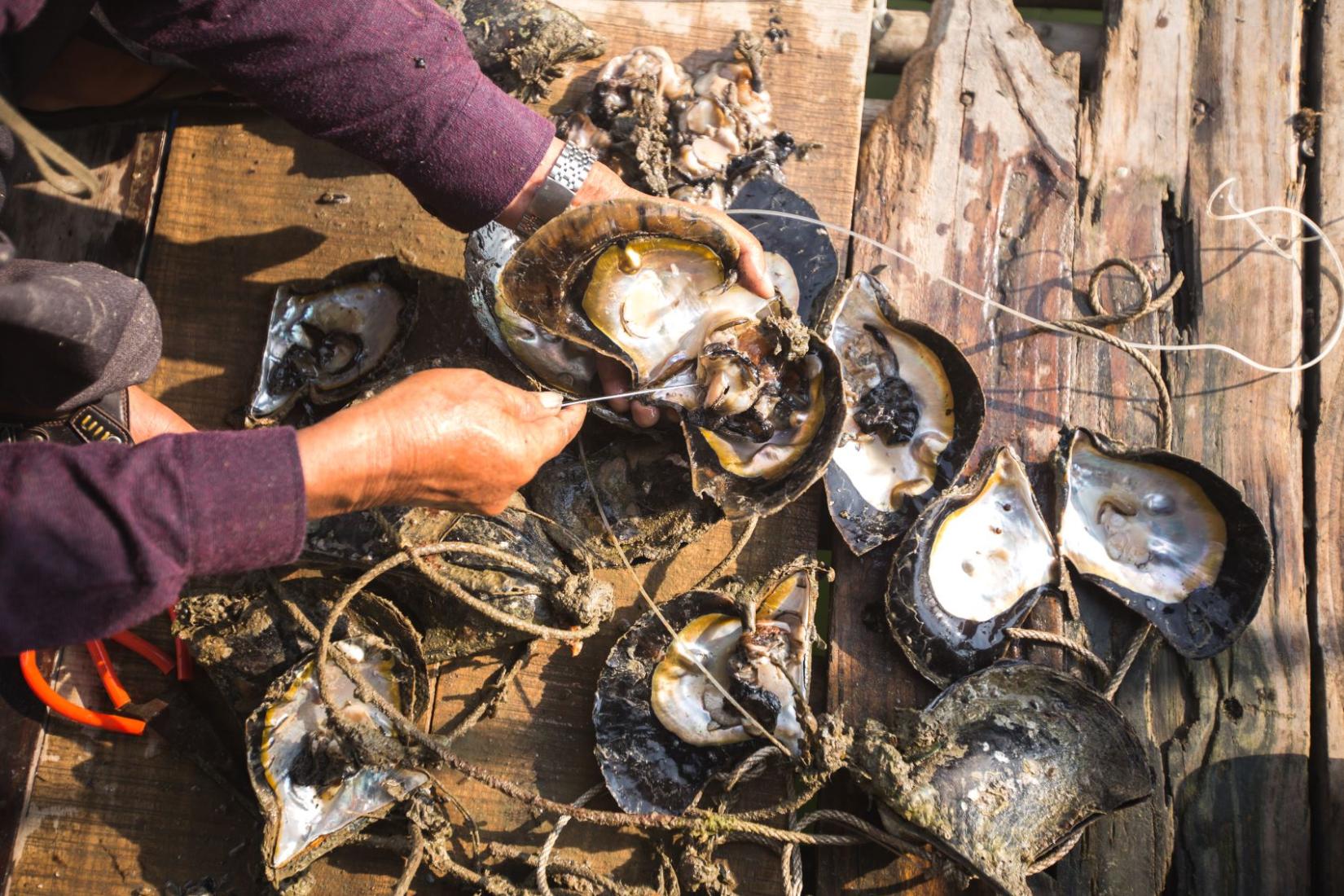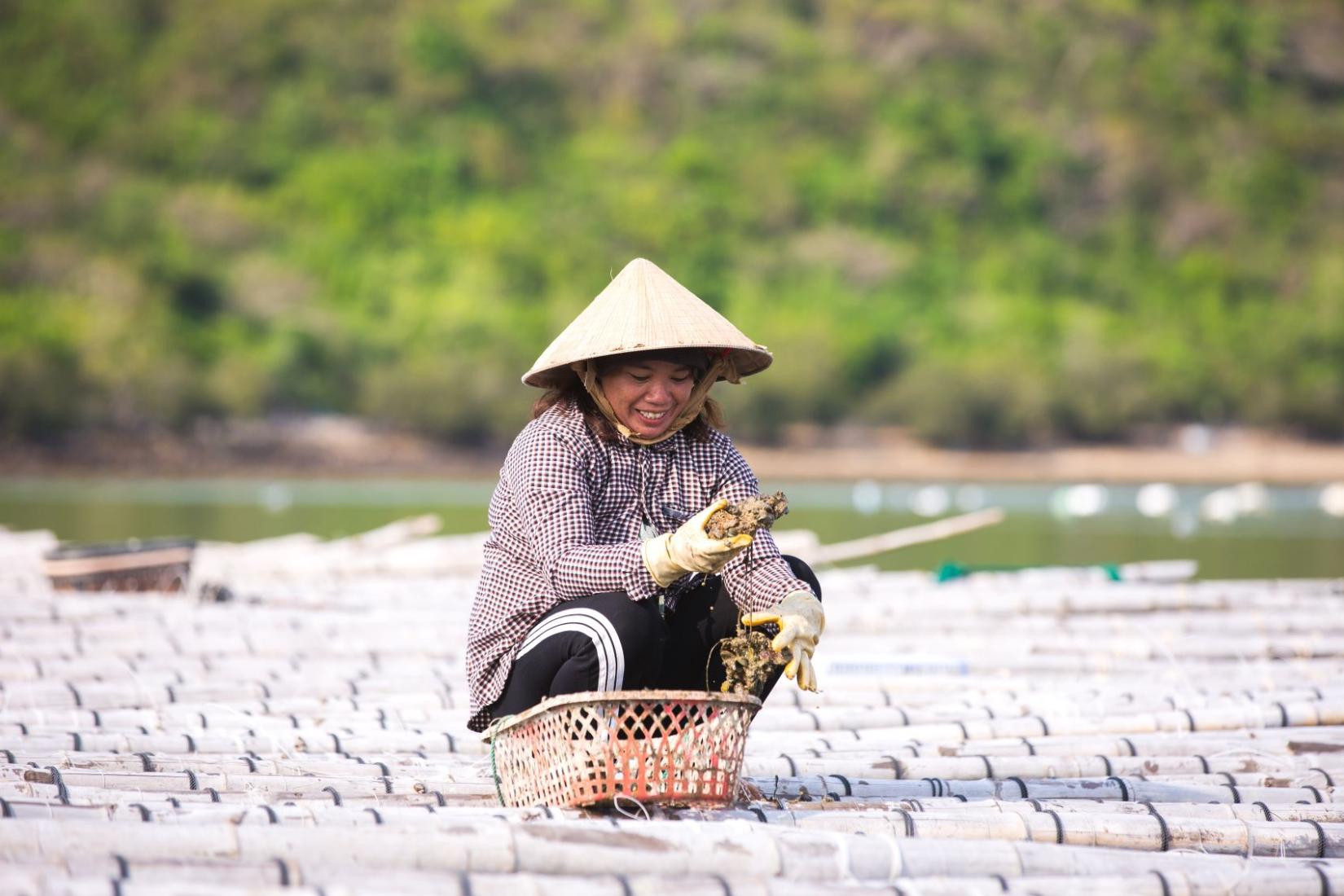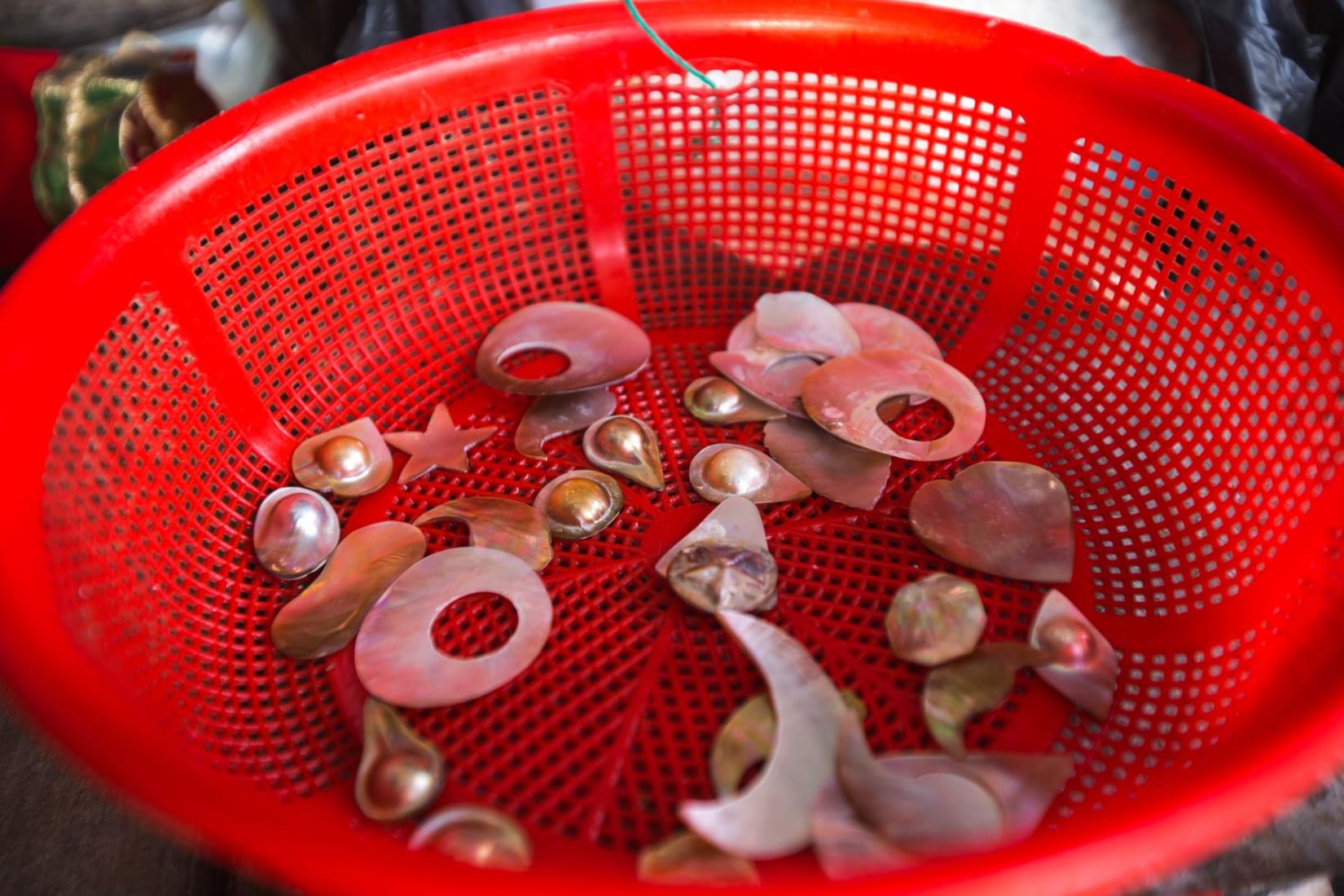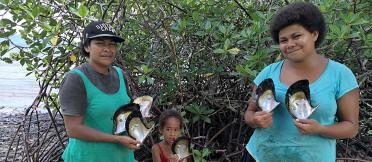


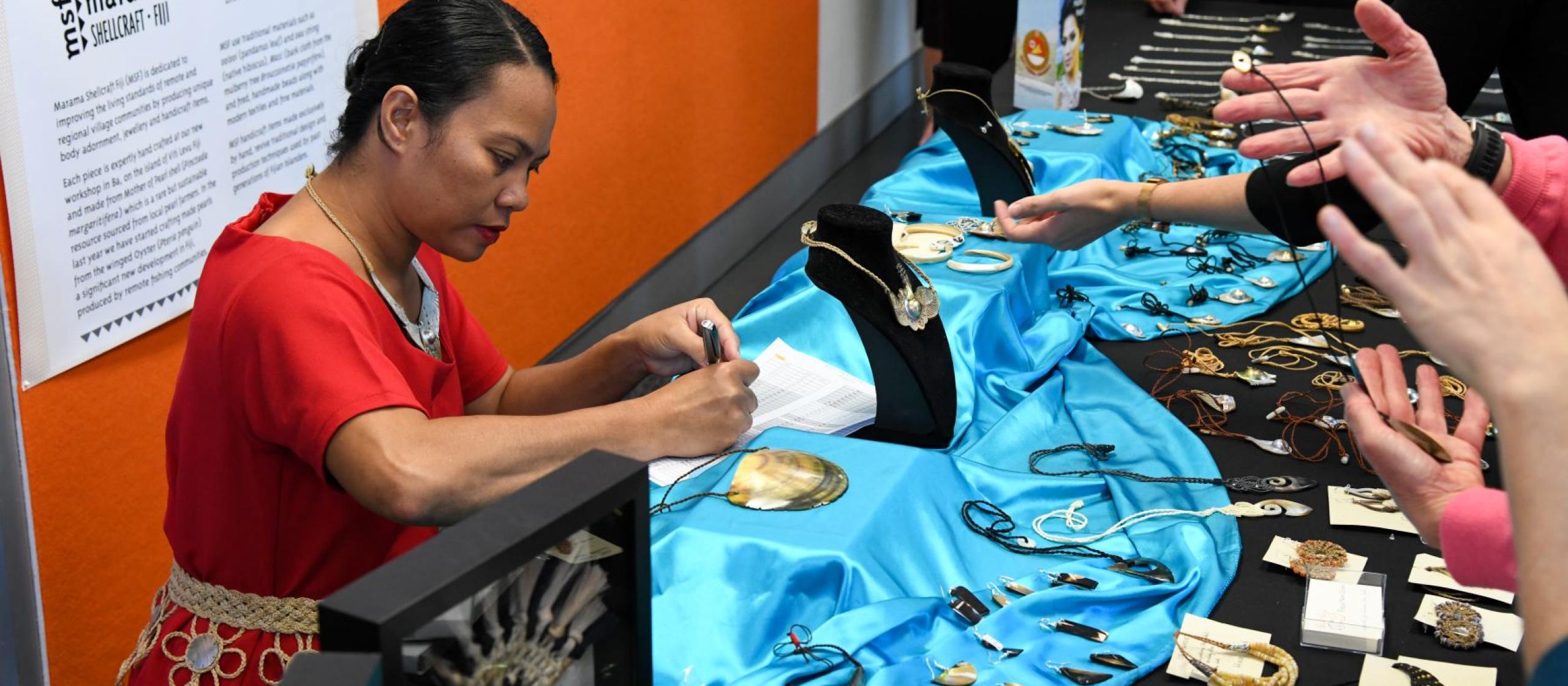


In both Fiji and Tonga, female artisans are using mabé pearls and the mother-of-pearl of oyster shells to create quality jewellery and handicrafts, driving the development of a mabé pearl farming sector.
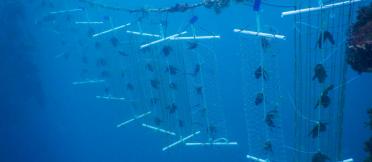
With support and training provided to communities through a series of ACIAR-supported projects, women are also farming for pearls and developing new livelihood opportunities.
Image
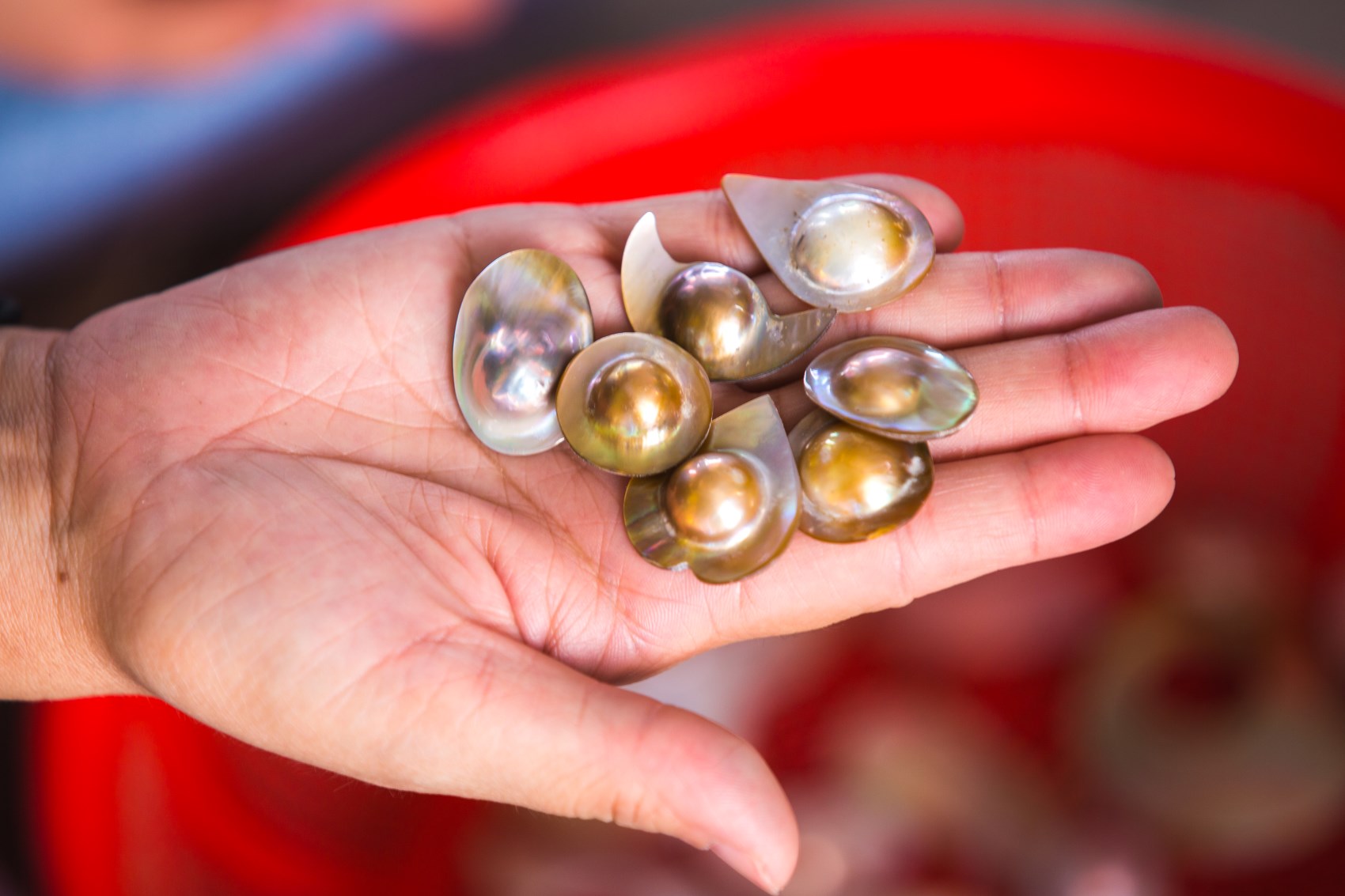
Mabé pearl potential
Professor Paul Southgate, at the University of the Sunshine Coast, leads mabé pearl projects for ACIAR, using the winged pearl oyster (Pteria penguin).
Professor Southgate said the production process for mabé pearls – also known as blister or half pearls – was simpler than for round pearls and could be learned by local people with training.
‘You can also create multiple pearls per oyster – usually 3 to 5 – and the mabé form in 10 to 12 months, which is around half the time required for a round pearl,’ he said.
Mabé pearls are also lightweight, non-perishable and high-value, and there is no minimum quantity needed to create value.
Assisted by ACIAR-supported research, 8 villages have established Fiji’s first community pearl farms, sustainably collecting pearl oyster juveniles, known as spat, and raising them to produce mabé pearls.